Best Noise Cancelling Headphones for Flying (2026)
 15 min read
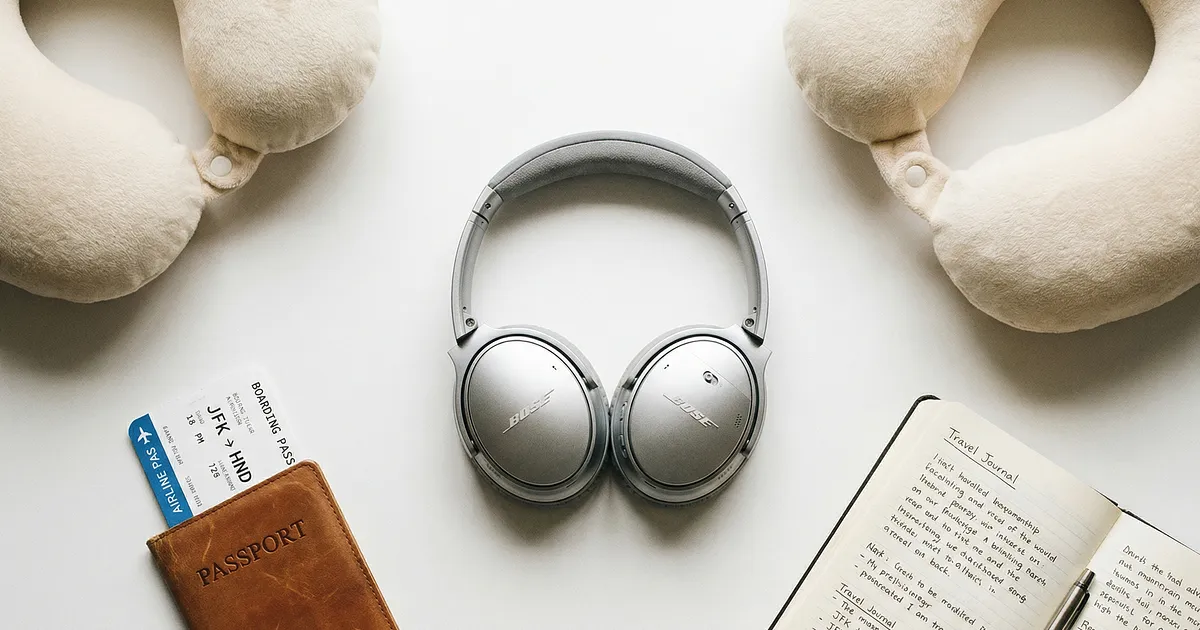
Twelve hours in a middle seat, an engine droning at what feels like concert volume, a neighbor snoring, a toddler crying two rows back. Flying long-haul without noise cancelling headphones is exactly the kind of trip that convinces people never to do it again.
Here's something most travelers don't realize: airplane cabins hit 80 to 90 dB(A) during cruise. Takeoff and landing? That spikes to 100 to 110 dB. For context, the WHO recommends a maximum of 80 dB for prolonged noise exposure. Modern ANC headphones can knock that down by up to 30 dB, bringing cabin noise from "close to a power saw" down to "quiet living room."
This ANC headphones review compares six models people actually buy for long-haul flights, from premium to budget, based on manufacturer specs and verified reviews. And honestly, not every expensive pair is worth it for flying. Some $350 headphones perform worse for this specific use case than a $90 pair. Here's the breakdown.
Quick answer: For most long-haul travelers, the Sony WH-1000XM5 inkl. Hardcase, Kabelloser Premium-Kopfhörer mit Noise Cancelling, Bluetooth, Hi-Res-Audio, bis zu 30 Std Akkulaufzeit is the best headphones for flying right now. If all-day comfort is your top priority, go with the Bose QuietComfort Ultra Headphones Over-Ear-Kopfhörer mit Noise Cancelling für räumlichen Klang, Spatial-Audio, Bis zu 24 Stunden Akkulaufzeit. Budget travelers will be surprised by how well the soundcore by Anker Space Q45 Bluetooth Kopfhörer, Adaptive aktive Geräuschunterdrückung bis zu 98%, 50 Std. Wiedergabe, LDAC Hi-Res Wireless Audio holds up.
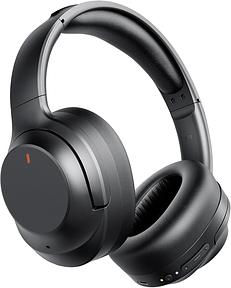
Not available in your region — closest match
View at Amazon (as of Aug 15)Affiliate link. Buying through it earns us a commission; the price stays the same for you.
Not available in your region — closest match
View at Amazon (as of Aug 15)Affiliate link. Buying through it earns us a commission; the price stays the same for you.
Not available in your region — closest match
View at Amazon (as of Aug 15)Affiliate link. Buying through it earns us a commission; the price stays the same for you.
Why ANC Headphones on Long-Haul Flights Are Not Optional
That might sound dramatic. But the numbers back it up.
Dr. Howard Francis at Duke University puts it bluntly: sound levels above 100 decibels can cause permanent hearing damage in as little as 15 minutes. Every takeoff and landing hits that level. On a long-haul flight, passengers are exposed to noise above the WHO safety threshold for hours on end.
Noise cancelling headphones on an airplane cabin can reduce that exposure by up to 30 dB. It's not just a comfort thing. It's a hearing protection thing. A peer-reviewed study from Delft University (2025) confirmed it with actual data: ANC headphones measurably improve subjective comfort at aircraft noise levels of 84 to 86 dB(A). Participants even slightly preferred ANC over traditional earplugs.
But it goes beyond hearing protection.
Sleep. Cabin noise is a well-documented barrier to in-flight sleep, and ANC is one of the few tools that measurably reduces it during cruise.
Focus. If you want to work on a plane or watch a movie without cranking volume to hearing-damage levels, you need ANC. A 2024 study published in ScienceDirect found that ANC clearly improved concentration in loud environments.
Long-term hearing health. Your ears don't regenerate. That's just biology.
The global ANC headphone market is projected to hit $35.9 billion by 2030 according to GlobeNewswire. This isn't a niche gadget anymore. It's becoming standard travel gear.
Noise Cancelling Headphones Comparison: All Models at a Glance
Here's the full picture, based on manufacturer specs and published reviews, scored on what actually matters at 35,000 feet: ANC performance, comfort after 4+ hours, battery life, and weight.
| Model | Price (approx.) | Weight | Battery (ANC on) | ANC strength | Foldable | 4h+ comfort |
|---|---|---|---|---|---|---|
| Sony WH-1000XM6 | $450 | 254 g | 30 h | 5/5 | Yes | 4/5 |
| Sony WH-1000XM5 | $200-260 | 250 g | 30 h | 5/5 | No | 4/5 |
| Bose QC Ultra 2nd Gen | $335-389 | 264 g | 30 h | 5/5 | No | 5/5 |
| Sennheiser Momentum 4 | $188-249 | 293 g | 60 h | 4/5 | Yes | 4/5 |
| Anker Soundcore Space Q45 | $89-100 | 295 g | 50 h | 3/5 | Yes | 3/5 |
| Sony WH-CH720N | $100-120 | 192 g | 35 h | 3/5 | No | 4/5 |
The numbers are useful, but they don't fully capture what it's like to wear a pair of headphones for twelve straight hours. So here's the breakdown, model by model.
Premium Picks: When You Want the Best
When you're looking for the best noise cancelling headphones for flying, the premium tier is where the biggest differences show up in real cabin conditions.
Sony WH-1000XM5: Our Top Pick for Most Travelers
The XM6 is newer, but the Sony WH-1000XM5 inkl. Hardcase, Kabelloser Premium-Kopfhörer mit Noise Cancelling, Bluetooth, Hi-Res-Audio, bis zu 30 Std Akkulaufzeit remains the better choice for most people who fly. Here's why.
What makes it stand out:
ANC performance is nearly identical to the XM6 in cabin conditions, according to buyer and reviewer comparisons — the difference is marginal enough that most people won't notice it.
30 hours of battery with ANC on. That's enough for a round trip to Asia without charging.
250 grams. Light enough to forget you're wearing them after a while.
Multipoint connection lets you stay connected to a laptop and phone at the same time, handy for working while a call comes in.
Worth knowing:
Not foldable. The case is bulkier than the XM6 or the Sennheiser Momentum 4 as a result.
Price has dropped to $200 to $260 since the XM6 launched, making the XM5 arguably the best value in the premium headphone category right now.
Unless the latest model specifically matters, the XM5 delivers nearly all of the XM6's cabin performance for a couple hundred dollars less.
Not available in your region — closest match
View at Amazon (as of Aug 15)Affiliate link. Buying through it earns us a commission; the price stays the same for you.
Sony WH-1000XM6: The Newest Kid on the Block
The XM6 does bring some real improvements:
12 microphones (up from 8 on the XM5): The new QN3 chip filters low and mid frequencies more effectively, according to Popular Science. Those are exactly the frequencies jet engines produce.
Finally foldable. The XM5 was the only premium headphone that didn't fold. Fixed. The magnetic case is more compact too.
254 grams. Barely heavier than the XM5.
The catch? Around $450. For frequent flyers doing 20+ long-haul flights a year, the investment might make sense. For two to four flights a year, the XM5 is more than enough.
Bose QuietComfort Ultra 2nd Gen: The Comfort King
If the Bose QuietComfort Ultra Headphones Over-Ear-Kopfhörer mit Noise Cancelling für räumlichen Klang, Spatial-Audio, Bis zu 24 Stunden Akkulaufzeit had to be summed up in one sentence, it would be this: few headphones sit on your head this well for this long.
FlyerTalk forum threads are full of frequent flyers discussing the "4-hour comfort wall" — over-ear headphones that feel great for the first hour but start pressing on the ears and getting hot after four.
The Bose QC Ultra is widely reported to have this problem the least of any headphone in this comparison. The ear cushions are large enough that most ears don't touch the inside, and the clamping force is noticeably lighter than Sony's.
What makes it stand out:
Best long-wear comfort reported across reviews, with minimal pressure points over many hours.
ANC matches Sony's best. Tom's Guide calls it "the best ANC yet."
30 hours of battery with ANC. Up from 24 hours on the first generation, a real upgrade.
264 grams. Light enough for all-day wear.
Worth knowing:
Not foldable. The case is on the large side.
More expensive than the Sony XM5 ($335 to $389).
Sound is subjective: Bose sounds "warmer," Sony sounds "more neutral." Personal preference.
If comfort is the top priority for long stretches without a break, the Bose is the pick. If ANC performance matters more and occasional breaks are fine, the Sony XM5 edges it out on value.
Not available in your region — closest match
View at Amazon (as of Aug 15)Affiliate link. Buying through it earns us a commission; the price stays the same for you.
Mid-Range: Best Value for Your Money
Sennheiser Momentum 4: The Battery Champion
60 hours of battery life. Sixty. With ANC turned on.
For travelers who spend multiple days on the road and don't want to hunt for a charging cable, the Sennheiser Momentum 4 is a standout. Reviewers routinely note it comfortably outlasts a full week of mixed travel — flights, train rides, hotel evenings — without needing a charge.
What makes it stand out:
That 60-hour battery.
Audiophile-quality sound. For music lovers, reviewers rate the Sennheiser above both Sony and Bose, with more depth and detail across the range.
Foldable with a compact case, easy to pack.
Price starts around $188 on sale, which feels like strong value for the spec sheet.
Worth knowing:
ANC is good, but not quite at the Sony XM5 or Bose QC Ultra level, particularly against deep engine rumble.
293 grams. Heavier than Sony (250 g) and noticeable after a few hours.
Ear cups are slightly smaller than the competition, worth trying before buying for larger ears.
Packing for a long-haul flight and don't want to bring three charging cables? The Sennheiser Momentum 4 is a strong pick.
Budget Picks: Good ANC Doesn't Have to Cost a Fortune
For travelers searching for the best noise cancelling headphones for flying on a budget, the under-$100 category has gotten surprisingly good.
Anker Soundcore Space Q45: Our Budget Pick
A noise cancelling headphone under $100 that can hold its own on a long-haul flight sounds like marketing talk — but the soundcore by Anker Space Q45 Bluetooth Kopfhörer, Adaptive aktive Geräuschunterdrückung bis zu 98%, 50 Std. Wiedergabe, LDAC Hi-Res Wireless Audio largely backs it up.
What stands out:
ANC is genuinely usable. Not Sony-level, but engine drone gets noticeably reduced. SoundGuys describes "drastic volume drops when enabled."
50 hours of battery with ANC. More than Sony, more than Bose. Twice what Apple AirPods Max offers.
LDAC support for higher quality Bluetooth audio.
Around $89 on Amazon, roughly a fifth of what the Sony XM6 costs.
Worth knowing:
295 grams. Heavier than the premium competition, and noticeable.
Build quality leans plastic. No aluminum, no premium materials.
Ear cushions get warm after three to four hours of continuous wear, per multiple reviews.
Music sounds okay, not great. Audiophiles will want to spend more.
For occasional travelers who take two to four long-haul flights a year, this is absolutely sufficient. One FlyerTalk user describes the Anker as offering "equivalent ANC to Sony's flagship" for a fraction of the price — a stretch, but not entirely wrong either.
Not available in your region — closest match
View at Amazon (as of Aug 15)Affiliate link. Buying through it earns us a commission; the price stays the same for you.
Sony WH-CH720N: The Featherweight Option
Just 192 grams. For an over-ear headphone with ANC, that's remarkably light, and reviewers consistently note how little it's noticed during long wear.
35 hours of battery with ANC.
ANC is solid but noticeably weaker than the XM5.
Priced around $100 to $120.
Multipoint Bluetooth for two devices simultaneously.
For extreme weight-conscious packers (anyone flying Ryanair hand luggage knows why every gram counts), the CH720N is worth considering. But ANC-wise, the Anker Space Q45 actually rates higher in most comparisons — an unusual case of the budget model winning on the metric that matters most.
Headphones on a Plane: Practical Tips for Long-Haul Travelers
Can You Actually Use Bluetooth Headphones on Planes?
Yes. Short answer, no restrictions. Bluetooth headphones are allowed in airplane mode because airplane mode only disables the cellular radio. Bluetooth and WiFi can be turned back on after takeoff. Most airlines explicitly allow Bluetooth headphones.
What most travelers don't think about: Bluetooth only connects to a personal device (phone, tablet, laptop). The seatback screens don't have Bluetooth transmitters, so there's no wireless connection to the in-flight entertainment system.
The Adapter You Probably Need
For the in-flight entertainment, either:
A classic airplane adapter (dual 3.5mm plug to single 3.5mm jack). Costs around $5 to $10, weighs nothing, belongs in every travel bag. Older aircraft on Lufthansa and Condor routes still use the dual-prong connector.
Or a Bluetooth transmitter (plugs into the seatback's 3.5mm jack, pairs wirelessly with the headphones). Costs around $20 to $40.
The cheap Mobi Lock Vergoldete Flugzeug-Kopfhörer-Adapter (2er-Pack), ermöglicht die Verwendung von Kopfhörern mit allen In-Flight Media Systemen covers it. Most ANC headphones include an auxiliary cable input anyway. A wired connection always works, needs no battery, and skips the pairing hassle.
Not available in your region — closest match
View at Amazon (as of Aug 15)Affiliate link. Buying through it earns us a commission; the price stays the same for you.
Comfort Over 10+ Hours: What Really Matters
Across reviews and frequent flyer forums, comfort on ultra-long flights consistently comes down to a few things:
Weight. Anything over 300 grams tends to become noticeable after hour three. The Sony XM5 (250 g) and Bose QC Ultra (264 g) have a clear advantage over the Sennheiser (293 g) or Apple AirPods Max (385 g). The AirPods Max are a great product, but their weight is a common complaint on 12-hour flights specifically.
Clamping pressure. Too tight causes headaches after two hours. Too loose means poor isolation and ANC leakage. Reviewers consistently rate Bose as finding the best compromise here.
Heat. Synthetic leather ear cushions get warm, sometimes noticeably so. On FlyerTalk, frequent flyers recommend taking the headphones off every two to three hours so ears can "breathe" — a small habit that makes a real difference on overnight flights.
And one more thing: for anyone planning to sleep during the flight, over-ear headphones combined with a neck pillow can be awkward, since the cups press against the pillow sideways. Some travelers bring compact in-ear headphones (like the Sony WF-1000XM6 or AirPods Pro) specifically for sleeping.
Your Case Matters Too
A good hardcase protects headphones inside a carry-on bag. Sony and Bose include cases, but for a universal option (or something more compact), ProCase or Khanka both make solid ones for $10 to $25. The Digicharge Tasche Kopfhörer Etui für Sony, JBL, Beats, Bose Over-Ear Headphones, Universal Hard Case Tragetasche 19x23cm is a good all-rounder.
Pro tip: pack headphones at the top of a carry-on or in the personal item, not at the bottom where they can get crushed and bent out of shape.
Not available in your region — closest match
View at Amazon (as of Aug 15)Affiliate link. Buying through it earns us a commission; the price stays the same for you.
Our Pick by Traveler Type
Instead of one "best" recommendation, here's an honest breakdown by how people actually travel:
Kofferly recommends: For most travelers, the Sony WH-1000XM5 offers the best combination of ANC performance, battery life, and value for long-haul flights. It's our top pick for best headphones for flying in 2026.
| You are... | Get this... | Why |
|---|---|---|
| Frequent flyer (10+ long-haul/year) | Sony WH-1000XM6 or Bose QC Ultra 2nd Gen | Best ANC + comfort. Worth the investment at this volume. |
| Regular traveler (4-10 flights/year) | Sony WH-1000XM5 | Nearly identical ANC to the XM6, but $200 cheaper. Best value. |
| Occasional traveler (1-3 flights/year) | Anker Soundcore Space Q45 | Solid ANC under $100. You don't need more. |
| Multi-day traveler (flights + trains + hotels) | Sennheiser Momentum 4 | 60h battery. A full week without charging. |
| Weight-conscious packer | Sony WH-CH720N | Only 192g. Every gram counts with carry-on limits. |
By the way, if you're putting together your cruise packing list, ANC headphones belong on it too. Not just for flying, but also for the cabin (ship engines are loud) and the sun deck (wind noise).
Spending over $200 on headphones just for flying can feel excessive at first. But a good night's sleep on an overnight flight instead of lying awake in engine noise, followed by a rested arrival instead of a wasted first vacation day, tends to change that calculation quickly for frequent travelers.
ANC headphones have become a fixture near the top of many travelers' packing lists, right alongside a passport. Whether the budget is $89 or $450 matters less than the decision to bring a pair at all.
If you want to know how to fit everything smartly into your carry-on, check out our guides for easyJet, Ryanair, and Lufthansa. And if your next trip involves the Alps? Our Coolcation hiking gear guide has some surprises too. For train travel in Germany, ANC headphones are just as useful, by the way.
All products from this post
The ones we named above are marked; the rest are alternatives in the same category.
Affiliate notice: As an Amazon Associate, we earn from qualifying purchases. Product prices and availability are subject to change.
Frequently Asked Questions
What are the best noise cancelling headphones for flying?
For long-haul flights, the Sony WH-1000XM5 is the best overall package: strong ANC, 30h battery, only 250g, and currently available from around $200. If maximum comfort is the priority, go with the Bose QuietComfort Ultra 2nd Gen. Both reduce cabin noise by up to 30 dB.
Are noise cancelling headphones worth it for flights?
Yes. A peer-reviewed 2025 study from Delft University confirmed that ANC headphones measurably improve comfort at aircraft noise levels of 84 to 86 dB(A). Modern ANC models reduce noise by up to 30 dB and help protect hearing on long flights.
How much do good noise cancelling headphones cost?
Solid ANC headphones start at around $89 (Anker Soundcore Space Q45). The sweet spot is $200 to $260 (Sony WH-1000XM5). Premium models like the Sony WH-1000XM6 cost around $450 but offer only marginal improvements over the cheaper XM5.
Can you use Bluetooth headphones on a plane?
Yes. Bluetooth is allowed in airplane mode because only the cellular connection needs to be disabled. Bluetooth and WiFi can be reactivated after takeoff. Most airlines explicitly permit Bluetooth headphones. For the seatback entertainment system, a 3.5mm adapter is needed since Bluetooth isn't available on most screens.
What headphone jack is used on airplanes?
Most modern aircraft have a standard 3.5mm audio jack at the seatback screen. Older planes use a dual-prong connector (two 3.5mm jacks). A cheap airplane adapter ($5 to $10) solves the compatibility issue. Direct Bluetooth connection to seatback screens is not available on most airlines.
Over-ear or in-ear for long flights?
Over-ear headphones with ANC generally provide better noise cancellation and comfort for long flights compared to in-ears. But some travelers bring both: over-ears for the active portion of the flight and compact in-ears (like AirPods Pro) for sleeping, since over-ear cups can press against neck pillows uncomfortably.
Sources
- 80 to 90 dB(A) during cruise betterhealthfacts.com
- WHO safety threshold faa.gov
- peer-reviewed study from Delft University (2025) pmc.ncbi.nlm.nih.gov
- 2024 study published in ScienceDirect sciencedirect.com
- GlobeNewswire globenewswire.com
- Popular Science popsci.com
- FlyerTalk forum threads flyertalk.com
- Tom's Guide tomsguide.com
- SoundGuys soundguys.com
- Bluetooth headphones are allowed in airplane mode airhelp.de