My First Flight in 5 Years: What Has Really Changed About Flying
 9 min read
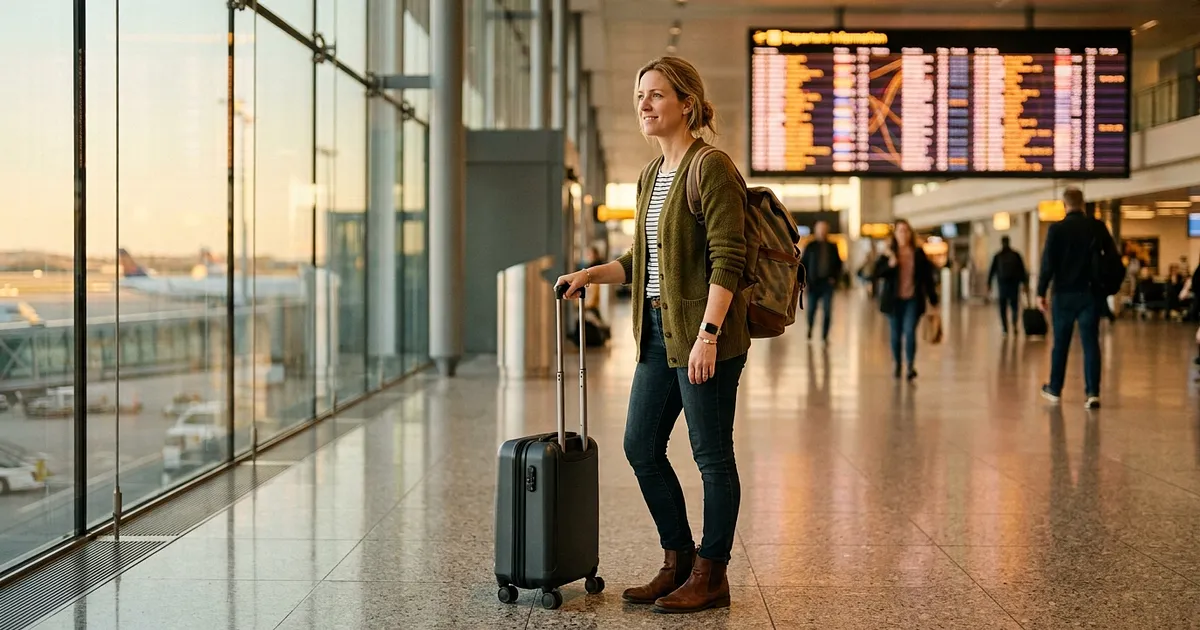
I was standing at the breakfast table, phone in hand, trying to book a cheap Lufthansa flight to Lisbon. Five years since I'd flown, my first flight after Corona, basically. 2021 was the last time, empty airport, mask mandate, terminals that felt half abandoned. I figured I could do this in my sleep. I couldn't. So what has changed about flying since I last stood at a gate? Honestly, more than I expected. It caught me off guard.
So, quick warning first. If you also haven't flown in a while and you're sitting nervously in front of the booking form right now: I just went through it. I'll tell you what's coming. And most of it is no big deal.
Five changes at a glance before we get into the details:
Hand luggage is no longer automatically included on Lufthansa Economy Basic since May 2026
Check-in and bag drop are mostly self-service now
CT scanners let you keep liquids and your laptop in the bag on some lanes, but far from everywhere
The EU's EES border system has been live since April 2026, but barely affects EU citizens on flights within Europe
Boarding runs almost entirely on your phone, paper boarding passes are the exception now
The first shock: what has changed about booking
The flight looked cheap. 89 euros, Economy Basic, Lufthansa. Click. And then it said: only one small personal item included. A laptop backpack, basically. My normal trolley? Costs extra.
I read that three times because I thought I was losing it. Lufthansa. The one with free hand luggage since, like, forever. But yeah: since May 2026, according to Business Insider, the cheapest Economy Basic fare no longer includes a trolley. The usual cabin bag (55x40x23 cm) now costs at least 15 euros on top. Just like Ryanair, easyJet and all the rest. We've put together all the Lufthansa carry-on rules and best luggage picks for 2026 in a dedicated guide.
And then the total price. Ugh. Flying has gotten expensive, and I'm not imagining it, the numbers back it up too. According to an analysis by Meine Fluggastrechte, ticket prices from German airports rose about 56 percent between 2019 and 2024. So it didn't start yesterday, it started before the pandemic. German aviation tax, airport fees, all of it lands on your bill in the end. We break down why flying got so expensive in Germany in a separate article on 2026 airport fees.
My tip, the one I gave myself too late: if you need your trolley, book Economy Light instead of Basic straight away. That includes an 8 kg trolley. Almost always pays off if you're travelling with more than a toothbrush.
No counter anymore: you check yourself in
At the airport, the next adjustment, one of the bigger airport changes 2026 brought compared to my last trip. My reflex was to look for the queue at the Lufthansa counter. Wasn't there. Or rather, it was there, just empty.
Check-in happens online now. Through the app, the night before, two minutes from the couch. Boarding pass on your phone, done. And if you're checking a bag, you do it yourself at the self-bag-drop: weigh the case, print the tag, stick it on, put it on the belt. No human behind the desk.
The first time I stuck the tag on upside down and had to start over. No disaster, a friendly staff member helped me out. But plan a few extra minutes if you've never done it before.
Small comfort on the side: airports aren't as packed as you might remember from the old days. Frankfurt Airport reported around 5.7 million passengers for May 2026. Sounds like a lot, but it's still a good fifth below the record year of 2019. So it's filling up again, but the big crowds from back then aren't quite back yet.
Security in 2026: what has changed with CT scanners at the airport
Now for the thing that confused me the most. Security.
You've probably read that there are new CT scanners now. At some airports they let you keep liquids up to two litres and your laptop right in the bag. Sounds amazing. It is. Sometimes.
Because here's the catch: as airliners.de reports, so far only individual security lanes in Frankfurt, Munich and Berlin have these CT scanners, and throughput on those lanes runs noticeably ahead of the classic X-ray checkpoints. Not even everywhere within the same airport, though. In Frankfurt, Terminal 1 might have the new tech, Terminal 2 won't. Everywhere else, the good old 100 ml rule simply still applies.
What does that mean for you? Pack as if the old rule still applies. Liquids in 100 ml containers, all in the clear bag. Then if you hit a modern CT lane, that's a nice bonus you didn't even need. If not, no problem. The other way round, you're annoyed because your shampoo ends up in the bin.
By the way, the new scanners aren't just for show, several people moving through at once instead of one at a time at a snail's pace, and that really makes a difference at the gate. Once that's rolled out everywhere, security gets faster. Just not everywhere yet. If you want the technical details on which airports are already converted, we wrote it all up for you in our CT scanner guide.
The big fear: fingerprints at the border?
Okay, now for the topic that causes the most panic online. EES. The EU's new Entry/Exit System, if you're not sure what the EES system actually is, we explain it in detail there. Fingerprints, face scan, biometrics at the border instead of the old passport stamp.
And I'll say it right away, because it's the single most important thing in this whole piece: if you're an EU citizen flying within Europe, this mostly doesn't apply to you.
Really. Berlin Brandenburg Airport spells it out: EU citizens are exempt from the biometric registration. EES only covers short stays by non-EU citizens entering the Schengen area. You go through the normal ID check like always. No fingerprint. No scan.
The system itself is real, though. According to the European Commission, EES has been fully operational at all Schengen external borders since 10 April 2026, and since the start in October 2025 over 52 million entries and exits have been registered. But that's travellers from non-EU countries, not you on your way to Lisbon.
When could it still catch you? If your trip goes through an airport outside Schengen, or if you fly to the UK, for example. And even then it usually goes smoothly. Travel reports like the one from VISAGUARD Berlin show that some airports did see delays early on due to technical glitches with the new terminals. But for most flights within Europe, it simply doesn't affect you. If you're curious what it's actually like to go through EES control, check out our first-hand account of crossing an EES border. So you can cross that one fear off the list.
Boarding: everything runs on your phone
At the gate, the last change, and it's harmless. Paper boarding pass? Hardly anyone has one. You hold your phone up to the scanner, it beeps, you walk through. At some big airports there are even gates with facial recognition.
My one real tip here: save your boarding pass as a screenshot or load it into your wallet. Airport wifi will be crawling exactly when you need the app most. I know. I was dumb enough to rely on it once.
So what has changed about flying? My takeaway
Honestly? After all that build-up, the flight itself was completely normal. Seat, snack, clouds, landing. Five years off, and you still end up sitting in the plane like always.
Most of what has changed about flying happens before departure. You do more yourself, you read the fine print more carefully, and you should plan a few extra minutes. The rest is like it used to be.
If you've got your first flight in years coming up: book the right fare, pack your hand luggage by the 100 ml rule, keep your boarding pass offline, and don't stress about EES. And if you want to know what fits in your cabin bag without paying extra at the gate, have a look at our Lufthansa carry-on guide. That's what it's there for.
Frequently Asked Questions
What has changed about flying the most since 2021?
You feel it most before departure: you do check-in and bag drop yourself now, digital boarding passes are standard, and hand luggage is often no longer free on cheap fares. On top of that, there are new CT scanners on some security lanes and the EU border system EES.
Do I still need to take liquids out of my hand luggage?
Depends which lane you end up at, honestly it's a bit of a lottery. Only certain CT lanes in Frankfurt, Munich and Berlin let you keep liquids in the bag. Everywhere else the 100 ml rule still applies. Pack by the old rule and you won't be annoyed at the gate.
Does EES affect me as an EU citizen?
On flights within Europe, almost never, and I only believed it myself once I saw it in writing. EU citizens are exempt from the biometric registration, the system covers short stays by non-EU citizens. It only becomes relevant on trips outside the Schengen area, such as to the UK.
Is Lufthansa hand luggage now paid?
On the cheapest Economy Basic fare, since May 2026 only one small personal item is included, that one caught me off guard too. For the classic trolley you pay extra, or book Economy Light straight away, which includes an 8 kg trolley.
How much earlier should I be at the airport?
A bit earlier than your old memory suggests. Self-check-in and self-bag-drop are slower the first time, and if a lane happens to break down you don't want the stress. For flights within Europe the usual two hours is usually plenty.
*Last updated: July 2026*