EES System April 2026: How the EU's New Biometric Border Control Works
 6 min read
April 9, 2026. That's the date when the EES System (Entry/Exit System) becomes mandatory at every EU external border. Fingerprints, face scans, digital registration. If you're a non-EU citizen traveling to the Schengen area, this changes your airport experience. If you hold an EU passport? You can probably stop reading here.
But you should probably keep going anyway. Because if you travel with someone who doesn't have an EU passport, or if you just want to understand why airport queues might get brutal this summer, this one's worth your time.
What Is the EES System?
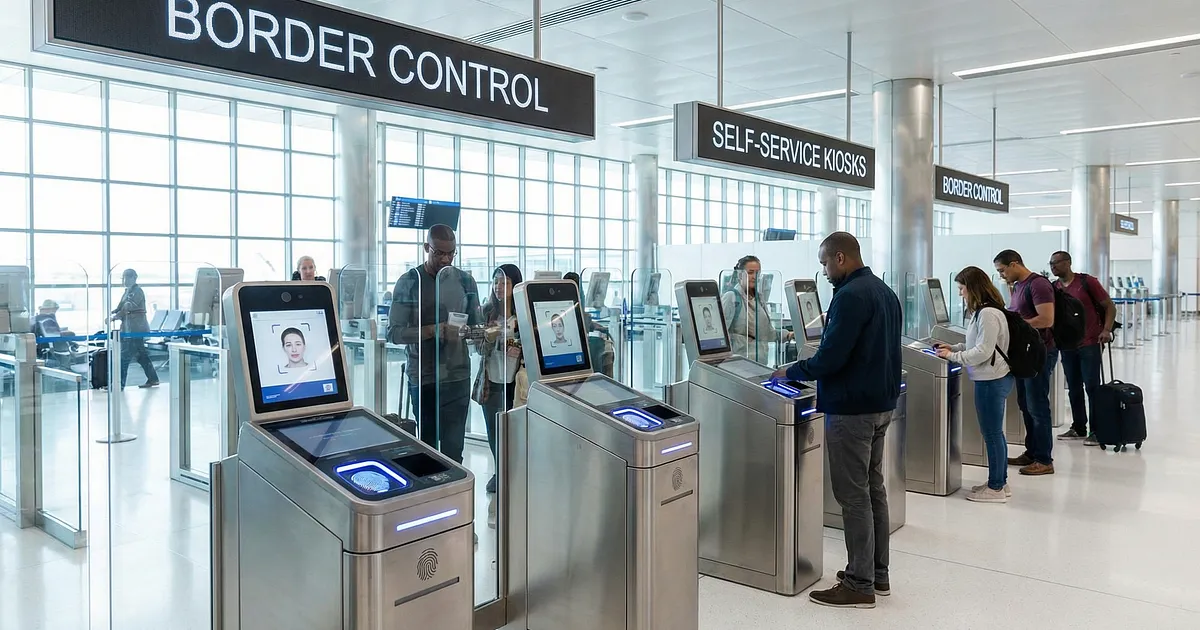
The EU Entry Exit System replaces old-fashioned passport stamps with digital biometric capture. Anyone entering the Schengen area from a non-EU country will have four fingerprints and a facial photo recorded.
The idea? The EU wants to track who enters and leaves. Sounds a bit surveillance-heavy, but it's mainly aimed at catching visa overstays. According to the German Federal Ministry of the Interior, the system should improve border security while speeding things up in the long run.
In the long run. We'll get to the short-term reality in a minute.
Who's Affected, Who's Not?
Good news first: if you hold a passport from any EU or EEA country, you're completely exempt. Normal passport check, no fingerprints, no face scan. Same as always.
Anyone with a residence permit (Aufenthaltstitel) for an EU country is also exempt. The German Federal Office of Administration confirms this explicitly. Transit passengers who don't leave the Schengen area aren't affected either.
So who does this affect? Americans, Brits, Australians, Japanese citizens, and everyone else who currently enters visa-free.
EES System at German Airports: Rollout Timeline
The EES System has been running at several German airports for months already. Here's where things stand:
| Airport | EES Start | Details |
|---|---|---|
| Dusseldorf (DUS) | October 12, 2025 | First German airport |
| Frankfurt (FRA) | October 29, 2025 | 218 kiosks, 60% usage rate on day one |
| Munich (MUC) | November 2025 | 119 kiosks per Munich Airport |
| Berlin (BER) | December 2, 2025 | Operational |
| Hamburg (HAM) | December 2, 2025 | Operational |
| All remaining borders | April 9, 2026 | Full mandatory rollout |
Frankfurt led the way. 218 kiosks installed, and 60% of eligible travelers used the self-service terminals on the very first day. Not bad.
How the Biometric Process Works
Your first time through the EES System takes a few minutes. Here's the step-by-step:
- Queue at the kiosk
- Scan your biometric passport
- Give four fingerprints (right hand)
- Face photo taken (take off your glasses!)
- Quick manual check by a border officer
- Entry confirmed
Return visits? About 20 seconds. Scan passport, match face, done.
Pro tip: the Frontex "Travel to Europe" app lets you pre-register your data. Doing this before you fly could save you real time at the airport.
The Summer 2026 Warning
This is where things get concerning. In February 2026, IATA, ACI Europe, and A4E issued a joint warning: wait times at some airports could hit four hours during summer 2026. Four hours. Just for passport control.
Lisbon already had to temporarily suspend EES in December 2025 after waits stretched to seven hours.
The EU responded: member states can temporarily suspend EES until September 2026 if fewer than 80% of travelers are registered. France requested the suspension. Germany hasn't.
With 199.5 million passengers at German airports in 2024 (per Statistisches Bundesamt) and summer peaks expected to break records, this is a real concern.
EES vs. ETIAS: What's the Difference?
People mix these up constantly. Two systems, two purposes.
EES is the biometric registration at the border. Free. Happens on arrival. Mandatory from April 2026.
ETIAS is an online travel authorization you apply for before your trip. Costs 7 EUR. Expected to launch late 2026. Similar to the UK ETA that became mandatory for UK travel in February 2026.
So if you're flying to Europe this summer: EES applies to you. ETIAS doesn't. Yet.
And speaking of April 2026 changes at German airports: Frankfurt's brand new Terminal 3 opens on April 22 with 21 CT scanners. Two big changes in one month.
What You Should Do Now
Honestly? If you're an EU citizen, nothing. Maybe pack a bit more patience for the airport, since passport control lines could get longer. A Holiday Extras survey found that 82% of travelers aren't sure how EES affects them.
If you're a non-EU traveler: download the Frontex app and pre-register for the EES System. And if you're flying into a busy European hub this summer, build in extra buffer time for border control. I'd say at least an extra hour on top of what you'd normally plan.
Frequently Asked Questions
What is the EES System?
The Entry/Exit System (EES) is a digital border control system by the EU. It records biometric data (fingerprints and a facial photo) from non-EU citizens entering and leaving the Schengen area. It becomes mandatory at all EU external borders on April 9, 2026.
When does the EES System start at German airports?
Major airports like Frankfurt, Munich, Berlin, and Hamburg have been using EES since late 2025. The system becomes mandatory at all remaining EU external borders on April 9, 2026. Dusseldorf was the first German airport in October 2025.
Are EU citizens affected by EES?
No. EU and EEA citizens are fully exempt from EES. People holding a residence permit for an EU country are also exempt. The system only applies to third-country nationals entering visa-free or with a visa.
What's the difference between EES and ETIAS?
EES is biometric registration at the border (free, from April 2026). ETIAS is a paid online travel authorization (7 EUR) that you apply for before traveling. ETIAS is expected to launch late 2026. Both systems complement each other.
How long does the EES check take at the airport?
The first registration takes a few minutes: passport scan, four fingerprints, and a face photo. Return visits are much faster, roughly 20 seconds. The Frontex app allows pre-registration to speed up the airport process.
*Last updated: February 2026*
Sources
- German Federal Ministry of the Interior bmi.bund.de
- German Federal Office of Administration bva.bund.de
- 119 kiosks per Munich Airport munich-airport.com
- Frontex "Travel to Europe" app frontex.europa.eu
- hit four hours during summer 2026 iata.org
- temporarily suspend EES until September 2026 euronews.com
- Statistisches Bundesamt destatis.de