Discover Airlines Carry-On 2026: Long-Haul Rules
 12 min read
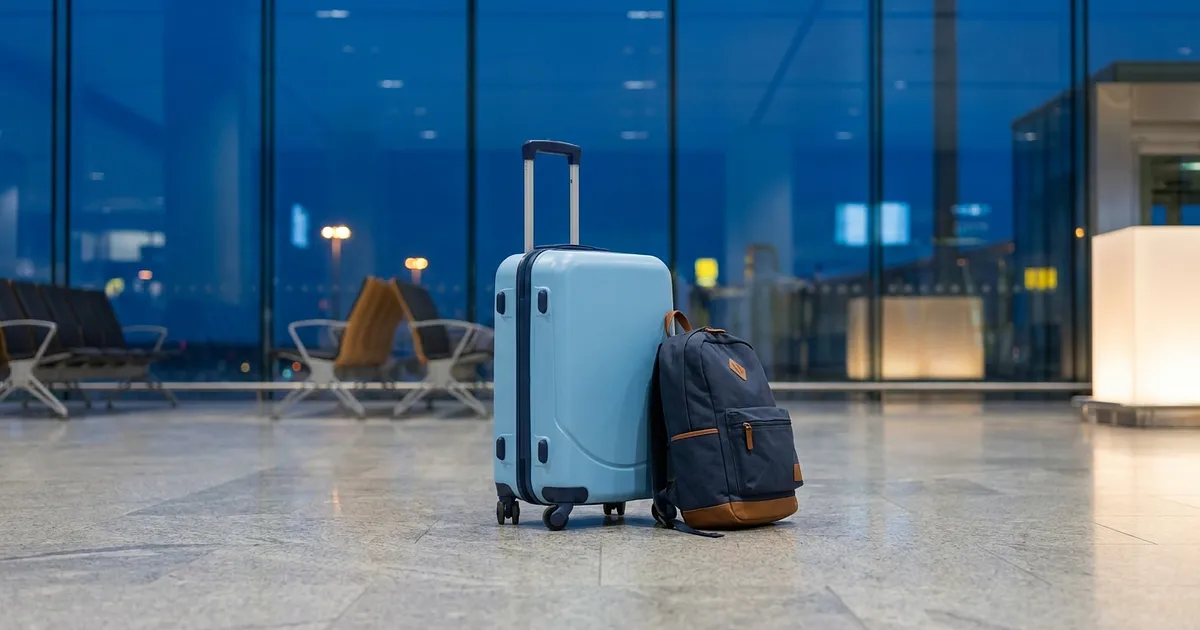
Booked through Lufthansa, but the itinerary says “operated by Discover Airlines”? Discover's rules come first for that segment. This is where Discover Airlines carry-on becomes more than a size chart. Your fare, cabin class and departure country matter too. A long-haul flight doesn't create extra room in the cabin.
According to the official Discover Airlines carry-on page, checked October 2026, Economy and Premium Economy normally include one 55 x 40 x 23 cm cabin bag weighing 8 kg plus one personal item measuring 30 cm (L) x 40 cm (H) x 15 cm (W). Business normally includes two cabin bags. Watch the exceptions: Economy Basic excludes the standard cabin bag, and the second Business bag must be checked on flights departing the USA. Discover lists both exceptions in its baggage table.
Discover Airlines carry-on size, weight and quantity
This table applies to Discover-operated flights, checked on 12 October 2026. It doesn't replace the baggage allowance shown in your booking. Economy Basic is the obvious trap: the broad word “Economy” isn't enough to establish that a trolley is included.
| Booking on a Discover flight | Cabin bag | Personal item | Detail people miss |
|---|---|---|---|
| Economy, except Basic | 1 bag, max. 55 x 40 x 23 cm and 8 kg | 1 item, 30 cm (L) x 40 cm (H) x 15 cm (W) | Your fare must include the cabin bag |
| Economy Basic | No standard cabin bag included | 1 personal item | Don't infer a trolley from the general Economy row |
| Premium Economy | 1 bag, max. 55 x 40 x 23 cm and 8 kg | 1 item, 30 cm (L) x 40 cm (H) x 15 cm (W) | A larger checked allowance doesn't mean more cabin bags |
| Business | 2 bags, each max. 55 x 40 x 23 cm and 8 kg | 1 item, 30 cm (L) x 40 cm (H) x 15 cm (W) | On USA departures, bag two must go in the hold |
| Foldable garment bag instead of a suitcase | 1 bag, max. 57 x 54 x 15 cm and 8 kg | Personal item stays separate | It replaces the normal cabin bag; it isn't an extra piece |
The dimensions and weights above come from the two linked Discover pages. Measure across wheels, handles and packed exterior pockets. A suitcase body may fit while its wheels take the full bag beyond the published limit.
Discover Airlines backpack allowance: can you take one as well?
According to Discover (checked October 2026), a small backpack can travel as your personal item if it stays within 30 cm (L) x 40 cm (H) x 15 cm (W). A laptop bag or handbag can fill the same role. The personal item goes under the seat in front. Calling an overfilled daypack a “personal item” doesn't make it small enough.
The distinction matters most in Economy Basic. Your personal item does not turn into an included 55 x 40 x 23 cm trolley because Discover's baggage table excludes that standard cabin bag from the fare (checked October 2026). You either travel with the smaller item alone or confirm that a cabin bag has been added to the booking.
If you're choosing a small backpack, the manufacturer's external measurements still decide whether it fits. “Underseat” in a product name isn't an airline guarantee.
How strictly does Discover check carry-on bags?
Discover says cabin baggage is checked for quantity, dimensions and weight at departure airports. Oversized or overweight pieces may be moved to the hold for a charge; the airline says processing at the gate costs more than at check-in and payment there is by credit card only. We haven't listed a fee because the amount can depend on route and booking.
That statement doesn't tell us whether every single bag on your flight will be weighed. Forum stories don't settle it either. One passenger gets checked, another doesn't, and a supposed policy appears out of two unrelated experiences. Only the published limit is dependable enough for planning.
If you want to compare your trolley with other carriers, our 2026 carry-on dimensions guide puts several airline limits in one place. For Discover, your own booking remains the final check.
Discover Airlines carry-on for connections: which operator's rule applies?
One booking reference doesn't produce one cabin-bag rule. Discover says the operating airline's rules apply to each flight. When several airlines are involved, Discover advises checking them all and preparing for the most restrictive relevant limit.
IATA explains why. Airlines set their own baggage policies, and limits may vary by carrier, travel class and even aircraft size. There is no universal 55 cm standard that overrides the named operator.
When Discover operates the long-haul sector
If the long sector says “operated by Discover Airlines,” use Discover's rule for that segment. According to Discover (checked October 2026), Economy and Premium Economy normally receive the 55 x 40 x 23 cm bag up to 8 kg, while Business gets two. Economy Basic remains the exception.
Flight duration doesn't change those dimensions. A transatlantic trip may make you want snacks, a neck pillow and a camera. It doesn't raise the published allowance.
When Lufthansa operates the feeder
There are two operators here, so you need two sets of rules. Lufthansa may operate the first segment and Discover the second. Find the “operated by” field for each segment in your itinerary, then check both airlines' current carry-on pages.
For the first leg, use our carry-on guide for a Lufthansa feeder. For the Discover sector, use the table here. If the limits differ, packing to the stricter relevant rule is the calmer choice and matches Discover's advice for multi-airline trips.
One ticket can still mean two different cabin-bag rules.
When the flight number says Discover but the aircraft does not
The marketing code at the front of the flight number isn't enough. Look for the operator field. For code-share sales covered by US law, 14 CFR § 257.5 requires “Operated by” followed by the transporting carrier for the affected segment. Booking displays elsewhere may use different wording, but the practical question stays the same.
When a partner is named, check that partner's cabin rules. The same applies to an onward flight after your Discover long-haul sector. Saving a screenshot of the operator, fare and baggage display can be useful if the app later gives the boarding pass more prominence. It records what the booking showed, though it doesn't replace the airline's current policy.
Four questions settle most mixed-carrier itineraries
- Who operates each individual flight segment?
- Which cabin class and fare are shown for that segment?
- What cabin allowance appears on the ticket, confirmation or boarding pass?
- Which relevant rule among the participating airlines is the strictest for your bag?
Run the same check for separate tickets. We deliberately aren't promising that checked baggage will transfer automatically. That is a different, booking-specific question.
Discover Airlines long-haul carry-on: what changes?
The bag doesn't get bigger just because the flight is longer. What changes is the number of checkpoints. The airline controls piece count, dimensions and weight. Airport security deals with liquids, while dangerous-goods rules decide where batteries may travel. A connection can bring another screening. Departing the USA also changes the treatment of the second Business bag.
Business flights departing the USA
According to Discover (checked October 2026), Business normally allows two cabin bags, each up to 55 x 40 x 23 cm and 8 kg. Its baggage table adds that on flights departing the USA, the second bag must be checked because of country-specific variations.
This rule follows the direction of travel. It doesn't apply to every ticket that happens to involve the United States. The general Business allowance may apply from Europe, while bag two goes into the hold on the return from the USA. Check the itinerary if another airline operates a feeder or onward leg.
Before handing over the second bag, move power banks, spare batteries, essential medication, documents and valuables into a small removable pouch. Plain advice, but useful. The pouch is easier than searching through shirts at the counter while the queue grows.
EU liquids and a US connection
An airline can accept your suitcase while airport security rejects something inside it. Under the EU cabin-baggage restrictions, liquid containers may hold no more than 100 ml and must fit together inside one transparent, resealable bag with a maximum capacity of 1 litre. Medicines and baby food have exceptions.
At a US checkpoint, the TSA rule is likewise 3.4 oz or 100 ml per container, packed in one quart-sized bag. Larger duty-free liquids on an inbound international trip with a US connection face extra conditions. They need an untampered secure bag and the original receipt from a purchase made within 48 hours, and they still have to clear screening.
Our guide to what is allowed in carry-on luggage covers the security side in more detail. Keeping the roles separate avoids a common mix-up: Discover accepts the bag, while the checkpoint assesses the liquids inside it.
Power banks must remain accessible in the cabin
Under Discover's rules for electronic devices and batteries, each passenger may take no more than two power banks, normally up to 100 Wh each. A unit above 100 Wh and up to 160 Wh needs airline approval. Power banks can't be used or charged on board, and Discover says they must remain accessible rather than stored in the overhead bin.
The EASA lithium-battery guide supports the main safety check: power banks and spare batteries stay in carry-on baggage and must be removed before a cabin suitcase is sent to the hold. Their terminals need individual protection against short circuits.
For capacity calculations and other carriers, see our power banks on planes guide. On a Discover-operated segment, the more specific Discover limit still controls.
The check before leaving for the airport
A careful check takes less time than repacking at the gate. Review the outbound and return journeys, including every feeder and onward sector. Don't stop at the first flight row.
- Operator: Your confirmation names who actually flies each segment.
- Fare: An added cabin bag must appear explicitly for Economy Basic.
- Strictest limit: Compare the dimensions and piece allowance of every operator.
- Bag size: Wheels, handles and filled exterior pockets count. So does the packed weight.
- Within reach: Power banks, spare batteries, medication, documents and valuables go in a small removable pouch.
- Offline copy: Save the operator, fare and baggage display before leaving.
One extra detail: according to Discover (checked October 2026), a foldable garment bag up to 57 x 54 x 15 cm and 8 kg can replace the standard cabin suitcase. It isn't an extra item.
Even a compliant cabin bag may be placed in the hold on a full flight when overhead space is limited. Discover describes a possible free check-in process. Electronic devices, power banks, e-cigarettes, valuables and essential medicines need to come out first. Don't rely on an advance email. A small removable pouch saves you from unpacking the trolley at the gate.
Frequently Asked Questions
How much carry-on does Discover Airlines allow?
According to Discover (checked October 2026), Economy and Premium Economy normally allow one 55 x 40 x 23 cm cabin bag weighing up to 8 kg, plus one personal item. Business usually allows two cabin bags. Economy Basic doesn't include the standard cabin suitcase.
Can I take a backpack in addition to my Discover carry-on?
Yes. According to Discover (checked October 2026), a small backpack can be your personal item if it measures no more than 30 cm (L) x 40 cm (H) x 15 cm (W) and fits under the seat. Economy Basic includes this item but excludes the standard cabin bag.
Does Discover allow more carry-on on long-haul flights?
No. According to Discover (checked October 2026), a long-haul flight doesn't automatically increase your allowance. Cabin class, fare, departure country and operating airline determine what you can take. On a mixed-carrier itinerary, check every segment and prepare for the strictest relevant rule.
Which carry-on rule applies to a Lufthansa feeder connecting to Discover?
Use Lufthansa's rule for the Lufthansa-operated feeder and Discover's rule for the Discover-operated long-haul sector. The operator of each segment matters, not merely the airline that sold the ticket or the marketing flight number.
What changes on a Discover Business flight departing the USA?
According to Discover (checked October 2026), Business normally permits two cabin bags, but the second must be checked on flights departing the USA. Move power banks, spare batteries, essential medication, documents and valuables into the cabin item that remains with you.
Can a power bank stay in a cabin suitcase that gets checked?
No. Power banks and spare batteries must remain in the cabin. Remove them before your trolley is sent to the hold at check-in or the gate. According to Discover (checked October 2026), the limit is two power banks per person, and you can't use or charge them on board.
Sources
- official Discover Airlines carry-on page discover-airlines.com
- baggage table discover-airlines.com
- IATA explains why iata.org
- 14 CFR § 257.5 law.cornell.edu
- EU cabin-baggage restrictions europa.eu
- TSA rule is likewise 3.4 oz or 100 ml per container tsa.gov
- rules for electronic devices and batteries discover-airlines.com
- EASA lithium-battery guide easa.europa.eu