EES System Active April 10: Wait Times and What Travelers Need to Know
 5 min read
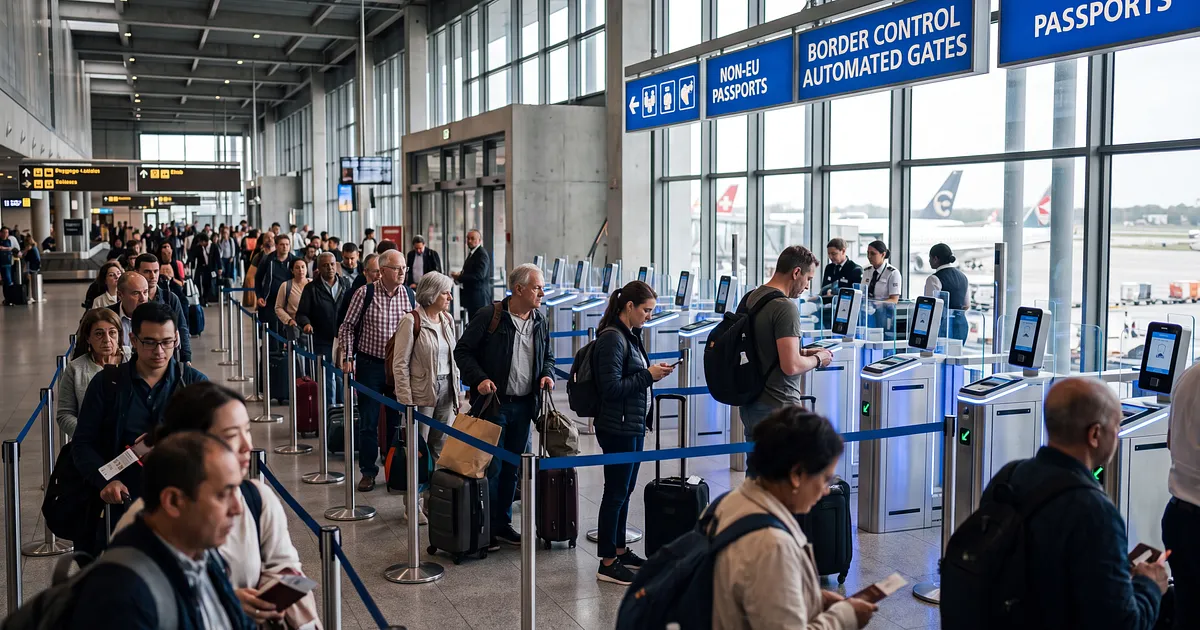
Seven hours. That's how long some passengers waited at Lisbon airport just to get through border control. Not a typo.
The entry exit system (EES) has been fully operational at all Schengen borders since April 10, 2026, exactly as the EU Commission confirmed. Since the phased rollout started in October 2025, the system has logged 45 million border crossings, refused roughly 24,000 entries, and flagged over 600 individuals as security risks.
We covered the basics in our pre-launch EES guide. This time, it's about what actually happened since then. And honestly? Some of it's been rougher than anyone expected.
What Changed?
The pilot phase ran at selected border crossings. Fingerprints, facial scans, digital registration. Standard stuff at this point. But starting April 10, every single Schengen external border must run the system. Airports, seaports, land crossings. No exceptions.
The EU says 45 million crossings were successfully processed. That sounds reassuring. I think the travelers who waited 7 hours in Lisbon probably don't feel the same way.
Who's Affected?
Non-EU citizens. That means travelers from the US, UK, Canada, Australia, and basically every other third country. Business travelers too, unless they hold a valid Schengen residence permit.
EU and EEA citizens? You're not affected. You keep using the EU lane. But if you're traveling with someone who doesn't have an EU passport, plan for extra time.
Anyone with a valid residence permit or long-stay visa is also exempt from EES registration, according to the German Federal Office of Administration.
Wait Times: The Numbers So Far
This is the part nobody wants to hear. Here's what airports have actually reported:
| Airport | Reported Wait Time | Context |
|---|---|---|
| Lisbon | up to 7 hours | System suspended Dec 2025 |
| Geneva | 5 to 6 hours | Peak periods |
| Paris CDG | 3+ hours | Regular occurrence |
| Brussels | approx. 2 hours | 600 missed flights in 4 days |
| Frankfurt | 2 to 3 hours | Varies |
| Amsterdam | 2 to 3 hours | Varies |
Lisbon actually suspended the entry exit system entirely in December 2025 because wait times became unmanageable. Euronews reported on the chaos during the initial rollout. Brussels saw 600 missed connecting flights in just four days. That's not an edge case.
Tips for Getting Through Faster
Can I promise you'll make your flight? No. But a few things help.
Download the Frontex "Travel to Europe" app. It lets you pre-register your data before the trip, so the border process moves faster. It's not mandatory, but it saves time.
If you have a connecting flight, build in at least three hours of buffer. I know that sounds extreme. Look at the Brussels numbers and tell me it's overkill.
Arrive 30 to 60 minutes earlier than you normally would. And if you can, fly off-peak. Early morning flights see shorter lines than afternoon departures. Simple, but most people don't think about it.
Summer 2026: Where Things Stand Now
IATA warned about 4+ hour wait times at major hubs during peak summer travel. Now that summer's here, that warning is playing out at several hubs. The long lines from spring haven't gone anywhere.
There is a suspension clause that allows countries to pause EES operations for up to 90 days during extreme disruptions. Biometric Update reported that this provision was already used during the pilot phase. Whether Portugal, Belgium, or others will invoke it again this summer remains to be seen. My guess? At least one country will.
The entry exit system isn't going away. The EU is committed to it, and the security benefits are real. But the growing pains are real too. If you're flying into Europe this summer, plan ahead. Build in more time than you think you need. Bring snacks, probably.
Frequently Asked Questions
Is the entry exit system free?
Yes. There's no fee for the biometric registration. It's free at first registration and at every subsequent border crossing.
Does EES affect EU citizens?
No. EU and EEA citizens are fully exempt. The system only applies to third-country nationals entering or exiting the Schengen area.
What's the difference between EES and ETIAS?
EES captures biometric data at the border (fingerprints, facial scan). ETIAS is a pre-travel authorization system applied for online before your trip. ETIAS isn't active yet and will likely cost 7 euros.
Can you pre-register for EES?
Yes. The Frontex "Travel to Europe" app lets you enter your data ahead of time. It speeds up the border process but doesn't replace the in-person biometric capture.
How long is my data stored?
Biometric data is stored in the entry exit system for three years. If you travel to the Schengen area regularly, you'll need to re-register after that period.
*Last updated: July 2026*