Why Flights to Asia Are So Expensive: The Persian Gulf Hub Collapse
 7 min read
Bangkok to Frankfurt for 3,200 euros. Six months ago, I saw that same ticket for around 1,000. Not a premium fare. Not a last-minute booking. Just the new reality after the Iran conflict tore through Persian Gulf aviation.
If you're trying to fly to Thailand, Japan, or Australia right now, you've probably noticed: long-haul flights to Asia are insanely expensive in 2026. And the reasons go deeper than "fuel costs went up."
What Happened at the Persian Gulf
Since late February 2026, the military conflict between the US, Israel, and Iran has knocked out the world's three biggest long-haul hubs. Dubai, Doha, Abu Dhabi. All three. At the same time.
The EASA recommended avoiding the airspace over Iran, Iraq, and Lebanon entirely. Emirates dropped to 60% capacity. Etihad to 15%. Qatar Airways saw a 41% cancellation rate.
Over 8,100 flights were cancelled in the first weeks alone. Tens of thousands of passengers got stranded in Dubai.
Why Asia Flights Get Hit So Hard
Long-haul flights to Asia are expensive right now because almost every route from Europe ran through the Gulf.
Dubai, Doha, and Abu Dhabi weren't just any airports. They were THE bottleneck for long-haul traffic between Europe and Asia, Australia, and East Africa. When all three hubs went down simultaneously, a third of global long-haul capacity vanished.
The result: tickets from Hong Kong to London surged by up to 560%, according to Alton Aviation Consultancy. Bangkok to Frankfurt: plus 505%. Sydney to London: plus 429%.
Jet fuel prices doubled too, from roughly $85 per barrel to as high as $200. That alone adds $80 to $150 per ticket, more than many budget flights within Europe cost altogether.
Alternative Routes: How to Get to Asia Without the Gulf
Good news: there are ways around the Gulf. Bad news: none of them are cheap.
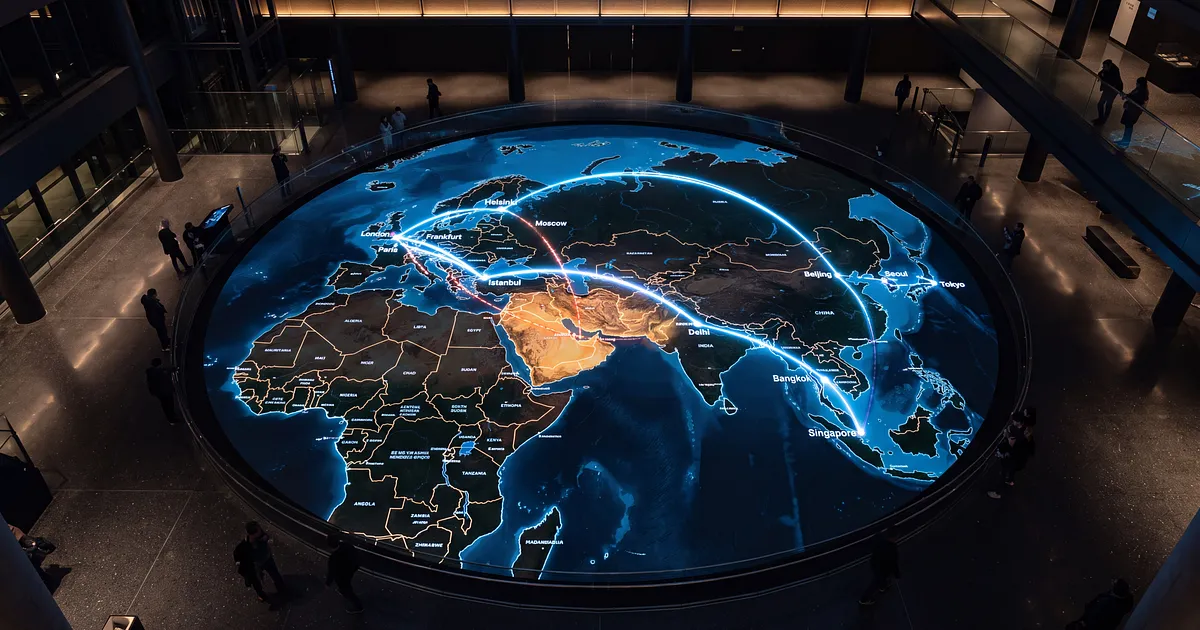
Via Istanbul (Turkish Airlines) is the most-booked alternative right now. Turkish Airlines flies from Istanbul to Bangkok, Tokyo, Singapore, and nearly every other major destination in Asia. What many people don't realize: you can connect to Istanbul directly from smaller German regional airports like Nuremberg or Hannover. No detour through Frankfurt required.
Via Helsinki (Finnair) is the top pick for Japan and South Korea. The northern route runs completely outside the conflict zone, and flight times to Tokyo or Seoul are actually shorter than the old Gulf route. That's not marketing. That's geography.
Via Delhi or Mumbai (Air India) is the cheapest of the three if you're heading to Southeast Asia. Prices tend to run significantly lower than European carriers. Honestly? If you rely on short connection times and a certain service standard, Turkish or Finnair will treat you better.
For context: one traveler from Munich who had originally booked via Dubai to Bangkok ended up paying around 180 euros extra after rebooking with Turkish Airlines. She also spent three extra hours in transit.
According to Aviation.Direct, Gulf-free routes currently carry about a 13% surcharge. Down from 17% in April. Getting better, slowly.
One practical note for those longer rerouted journeys: if you're flying 14 hours Frankfurt to Tokyo via Helsinki instead of 11 via Dubai, you'll feel the difference. A good FLOWZOOM Comfy Nackenkissen Flugzeug & Auto Reisekissen Memory Foam makes those extra hours in a cramped seat a lot more bearable. For anyone whose trip just got significantly longer, knowing how to sleep on a plane is genuinely useful. A pair of Bose QuietComfort 45 kabellose Noise-Cancelling-Bluetooth-Kopfhörer, Mikro, Schwarz cuts engine noise over the extra hours, an Anker Powerbank, 20000mAh 87W Max, integriertes USB-C Kabel keeps your phone and tablet charged for the whole detour, and DANISH ENDURANCE Medizinische Kompressionsstrümpfe aus Bio-Baumwolle, 14-18 mmHg, Thrombosestrümpfe Flug, Schwangerschaft, Laufen, Damen & Herren help against swollen legs on the longer time in your seat.

FLOWZOOM Comfy Nackenkissen Flugzeug & Auto Reisekissen Memory Foam
View at Amazon (as of Aug 10)Affiliate link. Buying through it earns us a commission; the price stays the same for you.

Not available in your region — closest match
View at Amazon (as of Aug 15)Affiliate link. Buying through it earns us a commission; the price stays the same for you.

Not available in your region — closest match
View at Amazon (as of Aug 15)Affiliate link. Buying through it earns us a commission; the price stays the same for you.

Not available in your region — closest match
View at Amazon (as of Aug 14)Affiliate link. Buying through it earns us a commission; the price stays the same for you.
Flight Cancelled? Here Are Your Rights
I keep hearing the same thing from passengers whose Asia flights got cancelled: "They have to pay me 600 euros!"
No. Not in this case. As travel law expert Prof. Dr. Ernst Fuehrich explains, the Iran conflict qualifies as "extraordinary circumstances" under EU Regulation 261/2004. That means no compensation payment under Article 7.
But here's what you do get: free rebooking or a full refund of your ticket price. You're also entitled to care (meals, hotel) if you're stuck at an airport. And if your luggage goes missing when rerouted through Istanbul or other unfamiliar hubs, here's what to do when your baggage gets lost and what compensation you can claim.
The ADAC also recommends checking current travel advisories before booking new flights. Travel warnings for the UAE, Qatar, and Bahrain have been lifted.
When Will Asia Flights Get Cheaper Again?
Honestly? Not as soon as anyone would like. Bryan Terry from Alton Aviation estimates that jet fuel price drops take up to three months to actually reach ticket prices.
Here's the current forecast: Summer 2026 prices on Asia routes are still about 70% above last year. For a broader picture of how summer 2026 European flight demand looks overall, check the full summer 2026 flight data here. By October, expect roughly 30% above 2025. Full normalization? Earliest late 2026, and even then a structural surcharge of 10 to 12% for alternative routes will probably stick around.
If you're planning a fall 2026 trip to Asia, don't wait for miracles. Book now instead of later. Compare the northern routes (Istanbul, Helsinki). Look at Air India for Southeast Asia. And budget an extra 200 to 400 euros from the start. That's the reality of 2026.
All products from this post
The ones we named above are marked; the rest are alternatives in the same category.
Not available in your region — closest match
Anker Powerbank, 20.000mAh tragbares Ladegerät mit integriertem USB-C-Kabel, 87W Max Schnellladung, kompatibel mit MacBook, iPhone, Samsung und mehr
View at Amazon (as of Aug 15)
Affiliate notice: As an Amazon Associate, we earn from qualifying purchases. Product prices and availability are subject to change.
Frequently Asked Questions
Why are flights to Asia so expensive in 2026?
Short version: three of the biggest airports in the world went down at the same time. Dubai, Doha, Abu Dhabi, all at once. That wiped out a third of global long-haul capacity overnight. When a third of the seats suddenly disappear, the remaining passengers pay for it. Add doubled jet fuel costs, and you get the situation we're in.
Can I cancel my Emirates flight for free?
If your flight was cancelled: yes, full refund or free rebooking. What you won't get is the standard compensation payment (250 to 600 euros under EU Regulation 261/2004). The Iran conflict qualifies as "extraordinary circumstances," so that rule doesn't apply here. Frustrating, but that's what the law says.
What alternative flight routes to Asia exist?
The three best options from Europe: Turkish Airlines via Istanbul (good for almost all Asia destinations, including smaller German airports), Finnair via Helsinki (best for Japan and South Korea, with shorter actual flight times), and Air India via Delhi or Mumbai (cheapest for Southeast Asia). All three routes bypass the Gulf conflict zone entirely. Check your new airline's baggage rules before booking.
When will flight prices to Asia normalize?
Long-haul flights to Asia will stay expensive through most of 2026. Analysts expect prices to remain about 30% above last year's levels through October. Full normalization is expected at the earliest by late 2026, with a structural surcharge of 10 to 12% for alternative routes likely to remain even after that.
Are flights through Dubai safe again?
Travel warnings for the UAE, Qatar, and Bahrain have been lifted. The EASA warning for Iranian airspace remains in effect. Emirates is flying again but with reduced capacity and altered routes. Transit problems in Dubai persist due to ongoing capacity restrictions. Check the latest travel advisories before booking any connection through the Gulf.
*Last updated: July 2026*