How to Sleep on a Plane: 7 Tricks That Actually Work (Plus Gadget Picks)
 9 min read
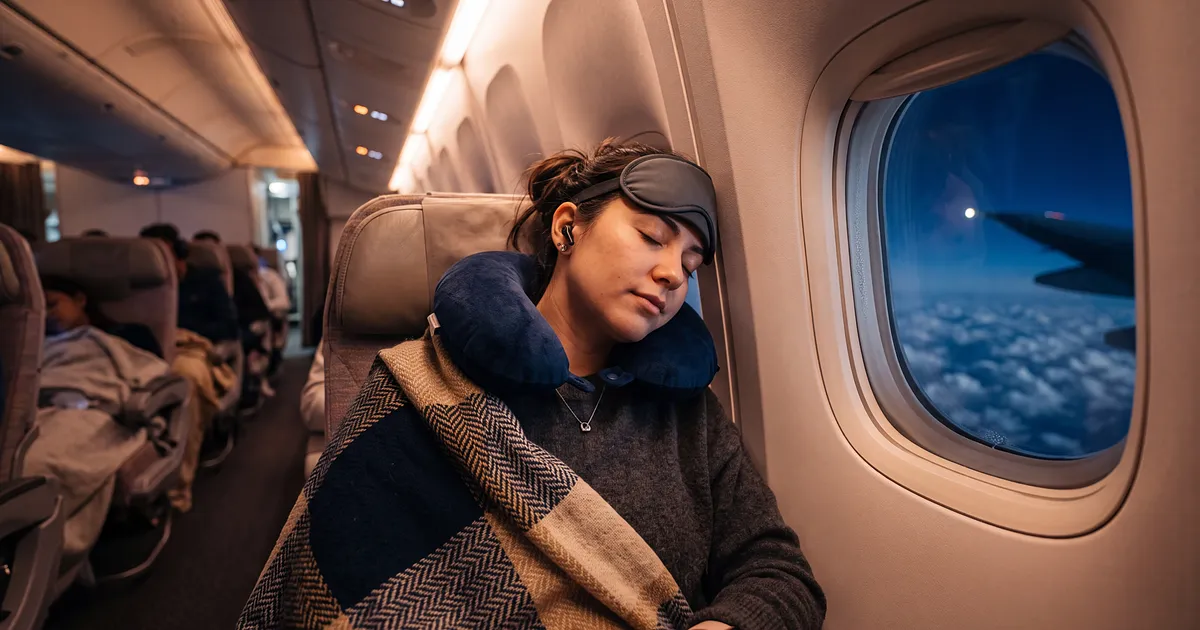
On an 11-hour flight in economy, plenty of passengers manage only a few disconnected naps while the person next to them by the window sleeps for hours. Same plane, same food, same noise — and yet whether you have a system or just figure exhaustion will handle things makes a huge difference to how much sleep you actually get.
It doesn't.
Sleeping on a plane is genuinely hard for three specific reasons. Cabin noise runs between 68 and 85 decibels depending on aircraft type. That's lawnmower territory. Cabin pressure simulates roughly 2,400 meters altitude, which drops your blood oxygen by 4 to 6 percentage points. And humidity? Five to ten percent. The Sahara sits at 25 percent.
But the right approach makes sleeping on long-haul flights genuinely better. It's not a business class privilege. Here are seven tricks that, according to actual research, work best for most people. Each comes with a specific gadget pick, because "bring a neck pillow" isn't useful advice when you don't know which one.
Quick answer: To sleep on a plane, book a window seat, use noise-cancelling headphones, and try to fall asleep as early as possible after takeoff. With a neck pillow, sleep mask, and correct melatonin timing, 3 to 4 hours of real sleep on a 10-hour flight is realistic.
Trick 1: The Best Seat for Sleeping on a Plane
Sounds obvious. It isn't, really. Window seat passengers report 40% better sleep quality in surveys compared to aisle seats. That makes seat selection the single biggest lever you have when trying to sleep on a plane.
Two reasons it works. You can lean your head against the cabin wall. And nobody wakes you up for a bathroom trip.
If you get to choose: window seat, rear cabin half. Front rows are popular with families and small children, and the baby screaming three rows ahead genuinely doesn't care about your sleep schedule. I use SeatGuru to check seat maps before booking. Free, takes two minutes, saves real frustration.
Trick 2: A Neck Pillow That Actually Supports Your Head
Most neck pillows are rubbish. There, said it. Those classic U-shaped ones at every airport shop? They slide off the moment your head tilts sideways.
What you need is memory foam that adapts to your sleeping position. The FLOWZOOM Comfy Nackenkissen Flugzeug & Auto Reisekissen Memory Foam is my go-to because you can adjust the firmness yourself. Sounds minor. Makes a huge difference when you're leaning against the cabin wall for hours. For a detailed comparison of the models we lined up against each other, check our neck pillow review guide.
Research shows that a 110-degree seat recline actually causes more neck soreness than sitting upright. A good neck pillow prevents your head from constantly pitching forward, which is what makes that angle so rough.
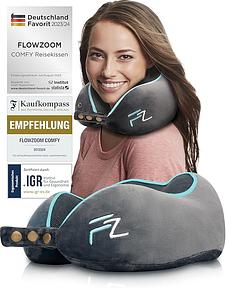
FLOWZOOM Comfy Nackenkissen Flugzeug & Auto Reisekissen Memory Foam
View at Amazon (as of Aug 10)Affiliate link. Buying through it earns us a commission; the price stays the same for you.
Trick 3: Block Out the Light (Properly)
Your brain only produces melatonin in the dark. Cabin lighting, your neighbour's screen, that reading light a few rows back: all of it interferes.
Researchers at Cardiff University found that a sleep mask doesn't just improve sleep. It also improves memory the following day because REM sleep gets deeper. Honestly, I didn't expect that: better memory from a seven-euro mask.
What matters when picking one: it shouldn't press on your eyes (uncomfortable during REM sleep) and it needs to actually block light. The Gritin 3D Schlafmaske für Seitenschläfer, Upgrade Atmungsaktive Schlafbrille mit Verstellbar Gummiband, Lichtblockierend is a 3D contoured mask that does both. Under 7 euros. Easy decision. If you want to charge your headphones and phone during the flight too, our guide to power banks in carry-on luggage covers what's allowed.
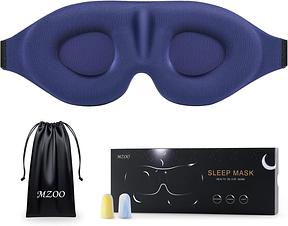
Not available in your region — closest match
View at Amazon (as of Aug 15)Affiliate link. Buying through it earns us a commission; the price stays the same for you.
Trick 4: Fight the Noise Actively
Noise is one of the main reasons sleeping on a plane is so difficult. Earplugs and noise-cancelling headphones sound like the same solution. They aren't. That's why a lot of travellers end up disappointed.
Foam earplugs work better for mid and high frequencies: voices, crying babies, the drinks cart rattling through. ANC headphones, though, are up to 17 decibels more effective than foam earplugs at low frequencies. And low frequency noise, that constant engine hum, is what actually disrupts your sleep the most.
For most travellers, ANC headphones are the better call. The soundcore by Anker Q20i kabelloser Bluetooth Over-Ear-Kopfhörer mit Hybrid Active Noise Cancelling has solid noise cancellation, sounds decent for music or white noise, and costs under 50 euros. For maximum silence? ANC headphones over foam earplugs combined. Sounds excessive. Works surprisingly well.
Not available in your region — closest match
View at Amazon (as of Aug 10)Affiliate link. Buying through it earns us a commission; the price stays the same for you.
Trick 5: Skip the Alcohol Before Sleep
Nobody wants to hear this.
"A glass of wine helps me fall asleep." Technically true. Alcohol does reduce the time it takes to fall asleep. It's a bit like taking a painkiller that helps short term and causes more problems down the line.
A DLR study from 2024 measured exactly this: after two glasses of wine, oxygen saturation in sleeping passengers dropped to 85.7 percent. Normal is 95 to 99 percent. Heart rate climbed to 88 beats per minute. These were healthy people, 18 to 40 years old. At 10,000 meters. Probably not the ideal combination.
Your sleep gets fragmented and less restorative. Your heart works harder than it needs to.
What actually helps: water. About 250 ml per hour of flight time. Yes, you'll visit the bathroom more often (yet another reason for the window seat). The dry cabin air pulls roughly 1.5 litres from your body on a 10-hour flight.
Trick 6: Time Your Melatonin Right
Melatonin might be the most misunderstood sleep aid for flying. Plenty of people take it. Very few know when.
A Cochrane Review (10 randomised trials, probably the most trustworthy evidence in this space) reached a clear verdict: melatonin works against jet lag. Not marginally. Every second treated person showed measurable improvement in sleep quality. The question is just: when do you take it?
Take 0.5 to 1 mg, 30 to 60 minutes before your target bedtime at your destination, not before departure. The CDC notes that doses above 5 mg provide no additional benefit.
Quick country note: melatonin regulations vary. In Germany, anything over 1 mg requires a prescription. Low-dose supplements (0.5 mg) are available over the counter. Check what applies where you live before buying.
Trick 7: Sleep Early on the Plane, Not Late
Most passengers eat dinner first, watch a film, then try to sleep somewhere in the second half. That's the wrong approach.
Sleep researcher Matthew Walker at UC Berkeley recommends the opposite: fall asleep as early as possible. In the first half, you're still tired enough. Your body hasn't fully shifted into "awake in unfamiliar surroundings" mode yet.
There's another factor. A large Oura Ring study with 57,000 participants found that travellers already lose 30 to 50 minutes of sleep the night before flying. You start with a deficit. Use it. That's exactly when sleeping on long flights works best. The same principles apply if you're travelling with kids: our overnight flight with family guide covers the specifics.
The routine that works: board, stow your things, set up the sleep kit (pillow, mask, headphones), and as soon as the seatbelt sign turns off, eyes shut. Dinner? Ask the crew to save you something. Most do it without any fuss.
Bonus: Give Your Legs a Break
Nobody talks about legs, but swollen, restless legs genuinely kill sleep. The Maliton Fußstütze Flugzeug, Aufblasbare Fußstütze Kissen für Reisen Auto & Zuhause & Büro, Höhenverstellbar is an inflatable footrest that elevates your legs and takes pressure off your thighs. About 16 euros. Most airlines allow them, but there's no universal policy, so check at check-in if you're not sure.
A Cochrane Review shows that compression socks reduce DVT risk by 90%. Less leg discomfort means better sleep quality.
Not available in your region — closest match
View at Amazon (as of Aug 15)Affiliate link. Buying through it earns us a commission; the price stays the same for you.
Honestly: Three Hours Is What to Expect
I want to be straight with you. Sleeping on a plane like you would at home, eight solid hours in economy, isn't going to happen. Articles that promise that are misleading.
But with these seven tricks? Three to four hours of real, restorative sleep on a 10-hour flight is achievable. Frequent flyers in online travel forums confirm this consistently.
Put together a basic sleep kit: neck pillow, sleep mask, ANC headphones. Total under 80 euros. The difference between zero sleep and three hours of proper sleep the next day is enormous. That's the whole point. For everything else that belongs in a smart carry-on, our carry-on packing list has you covered.
All products from this post
The ones we named above are marked; the rest are alternatives in the same category.
Not available in your region — closest match
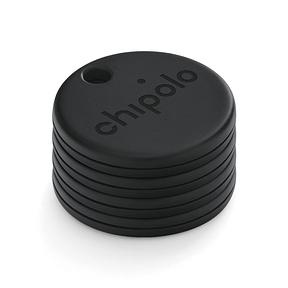
Chipolo ONE Spot - 4er Pack - Schlüsselfinder, Bluetooth Tracker - Funktioniert mit Apple Wo ist? App (Nur iOS)
View at Amazon (as of Aug 10)
Affiliate notice: As an Amazon Associate, we earn from qualifying purchases. Product prices and availability are subject to change.
Frequently Asked Questions
What's the best sleeping position on a plane?
Leaning sideways against the window, with a neck pillow supporting your head. Research shows that a 110-degree recline isn't ideal for your neck. Support your head laterally and lean gently against the cabin wall. Window seat required.
Can you take sleeping pills on a plane?
Prescription sleep aids like benzodiazepines impair your reaction time in emergencies. Combined with alcohol, the risks increase significantly, especially since interactions are stronger at altitude. Melatonin (0.5 to 1 mg) is a safer, evidence-backed alternative. Talk to your doctor first, particularly if you take other medications.
Are noise-cancelling headphones worth it for sleeping on flights?
Yes. ANC headphones target the low-frequency engine hum that disrupts sleep most. They're up to 17 dB more effective than foam earplugs at those frequencies. For maximum quiet, combine both.
When should you sleep on a long flight?
As early as possible. Sleep researcher Matthew Walker recommends sleeping in the first half of the flight, when natural fatigue is strongest. By the second half, your body has often already shifted into waking mode.
Does alcohol help you sleep on a plane?
No. Alcohol reduces the time it takes to fall asleep but fragments your sleep and drops oxygen saturation to 85.7% according to the DLR study. Drink water instead: roughly 250 ml per hour of flight time.
How can you sleep better on a plane?
The most effective steps: book a window seat, pack a sleep kit with neck pillow, sleep mask and ANC headphones, skip the alcohol, and fall asleep immediately after the seatbelt sign goes off. Add melatonin (0.5 to 1 mg, 30 minutes before your destination's bedtime) for jet lag. Three to four hours of real sleep on a 10-hour flight is realistic with these in place.
*Last updated: June 2026*
Sources
- Cabin noise runs between 68 and 85 decibels pmc.ncbi.nlm.nih.gov
- 40% better sleep quality mightytravels.com
- causes more neck soreness sciencedirect.com
- memory the following day fitbook.de
- 17 decibels more effective than foam earplugs ncbi.nlm.nih.gov
- DLR study from 2024 dlr.de
- Cochrane Review cochrane.org
- CDC notes cdc.gov
- Sleep researcher Matthew Walker at UC Berkeley masterclass.com
- Oura Ring study with 57,000 participants ouraring.com
- compression socks reduce DVT risk by 90% pmc.ncbi.nlm.nih.gov
- online travel forums vielfliegertreff.de