Interrail With Just a Backpack: My 2-Week Trip Through 5 Countries
 8 min read
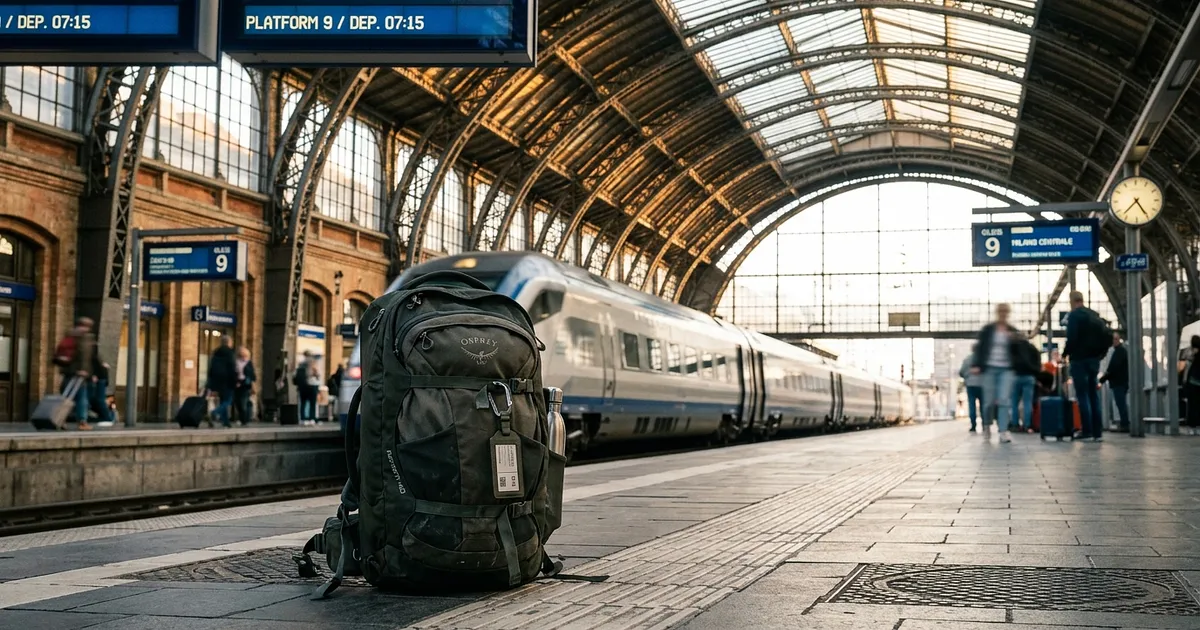
Munich Central Station, platform 11, just after 7 AM. I'm standing there with a 40-liter backpack on my shoulders, an Interrail Global Pass on my phone, and fourteen days of Europe ahead. Munich, Vienna, Budapest, Prague, Berlin. Five cities, five countries, one bag.
Sounds insane? I thought so too. But it worked. Really well, actually.
Why a Carry-On Backpack Beats a Rolling Suitcase for Interrail
I'll be honest. The original plan was different. My first instinct was a rolling suitcase plus a small daypack. Then I started doing the math on the route. Six train changes. Three of them with under 20 minutes to switch. An overnight train from Vienna to Berlin. Stairs in the Budapest metro (no elevator, obviously). And cobblestone streets in Prague that would murder suitcase wheels.
My friend Felix did the same route in 2024 and told me: "Take a backpack. Otherwise you'll hate yourself by Day 2."
He was right.
A compact Interrail carry-on backpack makes you significantly more flexible on European rail routes. According to independent rail expert Seat61.com, most European trains have no official weight limits. But storage space is limited. The overhead racks on a Railjet are about the same size as airplane overhead bins. A 40-liter backpack fits. A 70-liter monster does not.
If you want to know what traveling with just one piece of luggage really feels like, check out our 7-kg one-bag experiment across four European countries.
The Interrail Carry-On Backpack I Chose (and Why)
For my Interrail carry-on backpack I went with the Cabin Max Metz Reiserucksack Handgepäck Flugzeug 55x40x20 cm - Carry-On Rucksack 44L aus recyceltem Polyester. 44 liters, fits carry-on dimensions for most airlines (55x40x20 cm), weighs just over a kilo. Under 55 euros. Solid deal.
Why not something pricier? Honestly, I wasn't sure the whole carry-on-only idea would even work. Didn't want to spend a fortune on an experiment.
Looking back, the backpack handled everything a two-week Interrail trip can throw at you: rain in Budapest, an overnight train to Berlin, five hostel lockers, and an unplanned sprint to a connecting train in Prague. It came through every time.
If you're looking for the best backpack for Interrail, focus on three things: volume between 35 and 45 liters, airline carry-on dimensions, and under 1.5 kg empty weight. If you have a bit more budget and need a laptop compartment, check out the tomtoc 40L Reiserucksack, TSA Freundlich Groß Handgepäck Rucksack Travel Backpack. 40 liters, TSA-friendly, 4.7 stars from 4,700+ reviews. And for the budget-conscious: the Inateck 38.5-46.2 L Reiserucksack Erweiterbarer Handgepäck Flugzeug Rucksack, 15.6 Zoll Laptop Rucksack Carry on expands from 38.5 to 46 liters in case you pick up souvenirs along the way.
For a broader comparison, our carry-on backpack test puts eight models through their paces on real flights and train journeys.
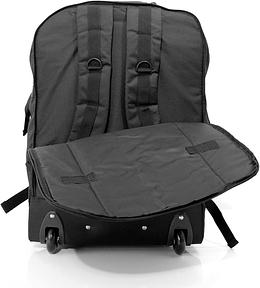
Affiliate link. Buying through it earns us a commission; the price stays the same for you.
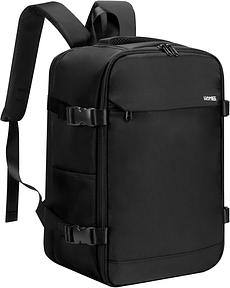
Not available in your region — closest match
View at Amazon (as of Aug 14)Affiliate link. Buying through it earns us a commission; the price stays the same for you.
Not available in your region — closest match
View at Amazon (as of Aug 14)Affiliate link. Buying through it earns us a commission; the price stays the same for you.
My Actual Interrail Packing List for 14 Days
Here is my Europe train trip packing list for 14 days. Not what I planned to pack. What was actually in the bag.
What do you really need for two weeks on Interrail? Honestly, less than you'd think. Here's what I found out the hard way.
Clothes (the pack-for-one-week method):
4 t-shirts (2 merino, 2 regular cotton)
2 pairs of shorts
1 pair of long pants (wore these on train days)
5 pairs of socks, 5 underwear
1 lightweight rain jacket
1 sweater for evenings and the overnight train
Tech:
Phone, charging cable, power bank
Headphones (absolute must on overnight trains)
Other:
Toiletry bag (travel sizes, under 100ml)
Microfiber towel
Padlock for hostel lockers
Earplugs, sleep mask
Interrail Pass (digital on the app)
What made the difference: Eono Kompression Packwürfel Set - Compression Packing Cubes für Koffer und Rucksack. Sounds silly, but compression packing cubes are the reason all of this fit in 40 liters. Clothes shrink to maybe half the volume. I never understood why everyone on the Interrail forums raves about them. Now I get it.
Haven't got a set yet? Our packing cubes comparison covers five models, including a chart of which cubes fit which bags.
For a premium option: the TRAVEL DUDE Packwürfel Set mit Kompression aus recycelten Plastikflaschen, Leichte Packing Cubes, Packtaschen Set für Rucksack und als Koffer Organizer (Wald Grün, 7-teiliges Set) are made from recycled plastic bottles and compress even more.
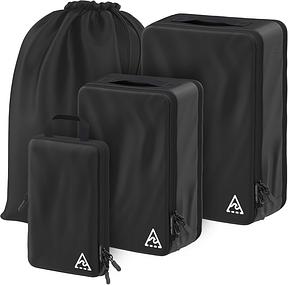
Not available in your region — closest match
View at Amazon (as of Aug 14)Affiliate link. Buying through it earns us a commission; the price stays the same for you.
Not available in your region — closest match
View at Amazon (as of Aug 14)Affiliate link. Buying through it earns us a commission; the price stays the same for you.
The Route: What Each City Actually Demanded
Munich to Vienna (4 hours, Railjet). According to the official Interrail route map, one of the most relaxed stretches in Europe. Backpack went up on the rack, I sat down with coffee and Alpine views.
Vienna to Budapest (about 3 hours). This is where the backpack got its first real test. Budapest metro stations don't always have elevators. With a rolling suitcase? Nightmare.
Budapest to Prague (change in Bratislava, roughly 7 hours total). Longest day of the trip. Bratislava gave me 40 minutes to make my connection. I needed 38 of them. With a rolling suitcase I would have missed that train. Not figuratively. Literally.
That's what a lightweight Interrail carry-on backpack is made for. It goes everywhere you go, including metro systems without elevators.
Prague to Berlin (about 4.5 hours). Final stretch. I did laundry in Prague the night before. The merino shirts dried overnight on the radiator.
Frequent overnight train traveler? Our night train packing tips cover what actually helps for earplugs, sleep masks, and neck pillows.
What I Regret (and Would Change)
Honestly? I got it mostly right. But two things I'd change.
The rain jacket was too thin for that evening in Budapest when temperatures dropped to 12 degrees out of nowhere. A packable down jacket would have been smarter. Folds into a sock.
And I should have packed laundry sheets. Vienna and Prague hostels had washing machines. Budapest? I did hand wash with shower gel. It works, but don't ask me how well.
What I cut and never missed: the laptop. I debated bringing it. Left it at home. Best decision of the entire trip. 1.5 kg saved and not a single day of regret. Everything you need (maps, tickets, hostel bookings) runs through the Interrail app and your phone.
Quick cost breakdown: Hostel lockers typically cost 2 to 4 euros per night. Washing machines run 2 to 5 euros per load. What you save: checked baggage on connecting flights or buses runs 15 to 30 euros per leg. With an Interrail carry-on backpack, that cost disappears entirely.
Why Interrail and a Carry-On Backpack Are Made for Each Other
I don't have some grand philosophy about why this combination works so well. I just know how it felt: you stand on the platform. The train pulls in. You get on. No check-in counter. No luggage scale. No waiting at a belt. The bag goes in the overhead rack and you look out the window.
That's it. That's the whole logic.
Train travel in Europe is booming. In 2023, over 1.2 million Interrail and Eurail passes were sold according to Eurail B.V., a 25% increase from 2022. My Europe train trip packing approach taught me one thing: you need less than you think.
Interrail.eu themselves recommend a small to medium backpack. Their reasoning: the bigger the bag, the more you stuff in. And the heavier every platform change gets.
If you're still on the fence: the route is set, the bag is packed. The worst that can happen is you get to day three and realize you brought one too many sweaters. You send it home or leave it in the hostel.
Nobody I've ever met regretted packing light. Not once.
Still packing? Our carry-on backpack test will help you nail down the right bag. And if you want to sharpen the packing list itself, the Interrail backpack experience goes deep on what actually matters on long train journeys.
All products from this post
The ones we named above are marked; the rest are alternatives in the same category.
Affiliate notice: As an Amazon Associate, we earn from qualifying purchases. Product prices and availability are subject to change.
Frequently Asked Questions
How big should an Interrail carry-on backpack be?
I got through 14 days fine with 40 liters. Under 35 gets tight if you're traveling more than a week. Over 45 won't fit in some hostel lockers, which gets annoying fast. The 40-liter range is the sweet spot for Interrail one bag travel.
Can you really do Interrail with only carry-on luggage?
Yes. I took a staircase in Budapest with about 60 steps and no elevator, thinking: suitcase people would be stuck right now. Five countries, 14 days, zero luggage headaches. Transfers are faster, you're more flexible with hostel check-in times, and you skip baggage fees entirely.
What are the best packing cubes for Interrail?
Compression packing cubes save the most space. The Eono Compression Packing Cubes (around 22 euros) are a solid entry point. For something more durable, the TRAVEL DUDE packing cubes made from recycled materials (around 45 euros) compress even harder and hold up through multiple wash cycles.
Do I need a laptop for Interrail?
I left mine at home and didn't regret it for a second. 1.5 kg less in your backpack makes a real difference over 14 days. Everything you need (maps, tickets, hostel bookings) works through the Interrail app and your phone. Seriously, leave it.
How do you do laundry while traveling?
Most hostels have washing machines (2 to 5 euros per load). Pack merino shirts, they dry overnight. My strategy for what to pack for Interrail 2 weeks: clothes for one week, do laundry halfway through. That's it.
*Last updated: June 2026*