Compression Packing Cubes vs Standard: Are They Worth It?
 7 min read
You're standing in the store (or scrolling Amazon) looking at two nearly identical packing cube sets. One costs ten euros more, just because "compression" is printed on the box. Which brings us to the whole reason this compression packing cubes vs standard comparison exists: is the extra money worth it, or are you paying for a marketing word?
Quick answer first. Sometimes yes, often no. It depends entirely on what you pack and which airline you fly.
I've been packing with cubes for years, tried both kinds, and honestly the difference is smaller than the brands want you to believe. I'll admit I used to assume compression was just automatically the smarter buy, until I stood at a gate with a smaller but overweight bag and paid the fee anyway. More on that in a second.
What's the actual difference?
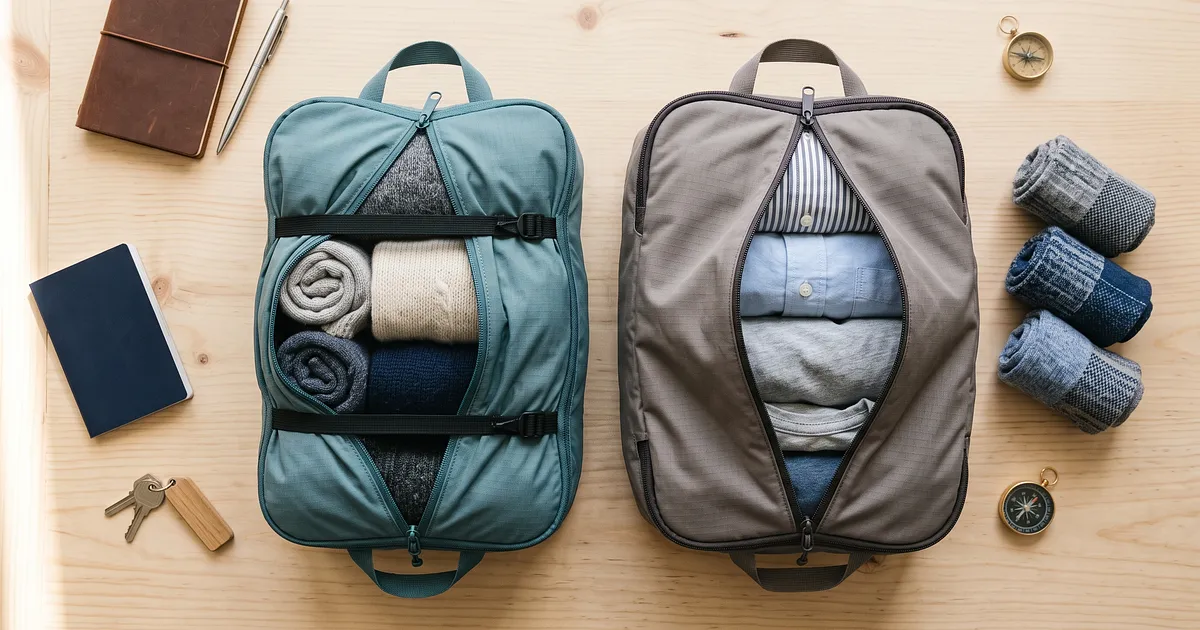
The whole trick lives in the second zipper. Standard packing cubes just hold your clothes together, tidy, in one spot. Packing cubes with compression (also called compression cubes) add a zipper that actively squeezes the air out once the first zipper is closed. That's how Eagle Creek describes its own Compression Cubes as the manufacturer.
Quick note to clear up a common mix-up. "Compression bags" are a different thing. Those are the vacuum-style ones where you press or roll the air out. We're talking about zippered cubes here, not vacuum bags.
How much space does compression actually save?
Now the numbers, since this is really what space saving packing cubes are supposed to deliver. Hands-on testing by Pack Hacker shows a compressed compartment shrinking from around 4 inches deep down to roughly 1.25 inches, in the 20 to 50 percent range depending on what's inside. But (and this matters) only with soft, bulky stuff. Fleece, down jacket, wool. German comparison site vergleich.org puts some compression models at up to a third less packed volume.
Stiff jeans or a structured blazer? Almost nothing happens. The fabric just won't give.
And the weight of the cubes themselves barely registers, though I underestimated this at first too. According to Matador Network, a full Eagle Creek set of two compression cubes (small and medium together) weighs about 54 grams total. Split between two cubes, there's not much weight left to argue about.
Compression Packing Cubes vs Standard: The Head-to-Head
| Criteria | Compression Cubes | Standard Packing Cubes |
|---|---|---|
| Space saved | 20-50% on soft items | Barely, just for organization |
| Cube weight | Slightly higher (2nd zipper) | A touch lighter |
| Price (set) | approx. €20-34 | approx. €13-25 |
| Wrinkling | More, especially cotton | Less, more breathing room |
| Durability | 2nd zipper = possible weak point | Fewer parts to fail |
| Best for | Winter clothes, sportswear, return souvenirs | Shirts, blouses, business, everyday |
Prices: as of July 2026, subject to change.
Worth a second look on that space-saved row: whether compression is worth it also depends on whether your airline checks by rigid dimensions or is more flexible on volume. See our guide to current carry-on size limits by airline if you're not sure which one applies to your bag.
The downsides nobody mentions
Here's where it gets honest. And where marketing splits from reality.
The big one first: compression saves space, but not a single gram of weight. Your clothes weigh exactly the same squeezed as loosely folded. Travelgoeat.com makes the same point explicitly, especially around weigh-ins at the gate.
Why does that matter so much? Because Ryanair, easyJet and Wizz Air weigh your carry-on. If compression lets you cram three extra sweaters in, the bag is smaller but heavier. Then you're standing at the gate paying the fee anyway, which is basically what happened to me. Compression just did me a real disservice there. If you fly budget airlines a lot, keep that in mind, see our comparison of Ryanair, easyJet and Wizz Air gate fees for the exact numbers.
Just as annoying: wrinkles. You'd think more pressure means fewer creases. Wrong, exactly backwards. As Pack Hacker found in their own hands-on testing, clothes crease noticeably more inside a compression cube, because the fabric gets forced into tighter folds under pressure. Fine for your summer tee. A real problem for a linen shirt or a suit.
Then there's the shape. Compressed cubes go round and bulge out, and in a rectangular suitcase that wastes the corners. A bit ironic, given what you bought them for in the first place.
And then there's the skepticism from seasoned travelers. On the Rick Steves travel forum one poster puts it bluntly: compression cubes don't solve an actual problem, they mostly encourage overpacking, because you suddenly believe more will fit than it probably should. A bit harsh, sure. But not entirely wrong, I had to admit, after falling into that exact trap myself.
If you're already wondering what's even allowed in carry-on in the first place, our guide to carry-on luggage rules covers that. Compression doesn't change the rules, it just changes how close to the limit you end up packing.
So are compression packing cubes worth it? The verdict
Let's be straight. No "it depends" without an answer.
Compression is worth it if you:
pack lots of soft, bulky clothing (winter trips, ski holidays, fleece and down)
have a tight volume limit but no weight limit (typical for bigger cabin bags or backpacks)
want to keep space free for souvenirs on the way home
travel mostly with a hard-shell suitcase rather than a soft backpack, where the rounded cube shape matters less
Standard cubes are enough if you:
fly weight-strict budget carriers (Ryanair and friends weigh your bag)
pack mostly shirts, blouses, business or linen clothing
want maximum durability and no second zipper as a weak point
just want an organized suitcase, not a volume miracle
My personal take? I start almost every trip with standard cubes first. They're cheaper, last longer, and cover 90 percent of trips. Buy compression later, on purpose, once you realize volume is your actual problem. Not the other way around.
This compression packing cubes vs standard comparison really comes down to one thing: there's no universal right answer, only the right call for your travel style and your airline. If you want to know which specific sets won our full packing cube test, have a look there. That one's about the product. This one was about the bigger decision.
Frequently Asked Questions
Do compression packing cubes really save space?
Yes, but only with soft, bulky items like fleece, wool or down jackets. Testing shows 20 to 50 percent volume savings there. With stiff materials like jeans or blazers, barely anything changes because the fabric doesn't give.
Does compression reduce luggage weight?
No, not a gram. Compression only squeezes out air and shrinks the volume. Your clothes weigh exactly the same. This matters for budget airlines like Ryanair or easyJet that weigh your carry-on at the gate, see our story on paying a gate fee for 2cm over the limit for how expensive that can get.
Do clothes wrinkle more in compression cubes?
Sadly yes. The pressure forces fabric into tighter folds, especially cotton and linen. Fine for sportswear or fleece, but for shirts and suits you're better off with standard cubes.
Are compression packing cubes good for carry-on?
For volume-limited cabin bags without a strict weight cap, they can pay off. But be careful with weight-checked airlines: you fit more, which adds weight and risks gate fees. In my experience Eagle Creek doesn't perform meaningfully differently from cheaper sets here, the physics stays the same regardless of brand.
Are Eagle Creek Compression Cubes the best choice for compression packing cubes?
Eagle Creek is the classic and holds up well long term. Nordkamm is a solid option in Europe, often with added waterproofing. Compression performance is similar across most branded sets, though, the bigger difference is build quality.
*Last updated: July 2026*