Sustainable Luggage 2026: Why Recycled Suitcases Are Taking Over
 6 min read
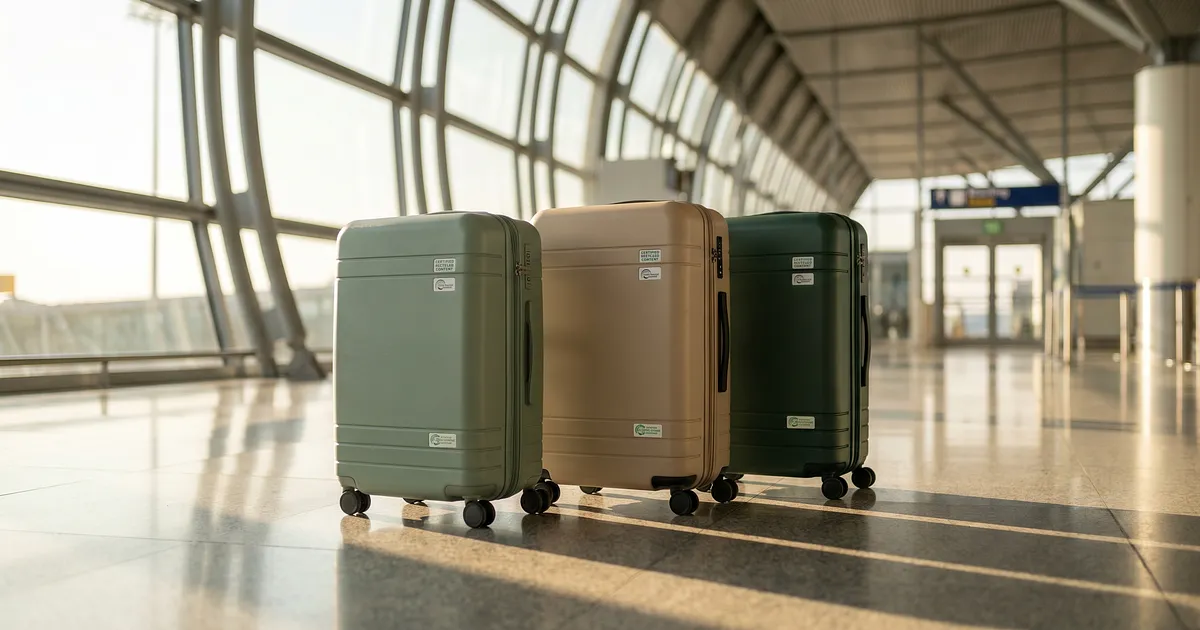
27% more recycled plastic in the luggage market within a single year. The sustainable segment is growing at a CAGR of 12.04% according to Market Research Future, nearly double the rate of the overall market. These aren't niche numbers anymore.
I'll be honest: two years ago, I thought sustainable luggage was a nice-to-have. Something for eco-conscious travelers willing to pay a premium. I was wrong. The global luggage market sits at $43.77 billion in 2026, and a growing chunk of that is made from recycled materials. So what changed?
Three reasons this is happening right now
The EU forced the issue. The Ecodesign for Sustainable Products Regulation (ESPR) has been in effect since July 2024. Starting July 2026, large and medium companies can no longer destroy unsold consumer goods in the EU. Digital Product Passports are becoming mandatory — a digital product passport tells you where the materials came from and what to do when the suitcase eventually breaks. For luggage manufacturers, the shift to recycled materials isn't optional anymore. It's regulatory.
Gen Z travels differently. According to Germany's Federal Environment Agency, 48% of Germans want environmentally responsible vacations. Only 26% are willing to pay more for it. That sounds contradictory, but the pressure pushes brands to offer sustainable luggage at normal prices. And they're delivering.
Even Samsonite went all in. The world's largest luggage maker announced circular economy suitcases with Digital Product Passports in April 2025. Already 47% of their 2024 revenue came from products containing recycled materials. When Samsonite takes sustainability seriously, it's no longer a trend. It's the new normal.
German brands worth knowing
Three names keep coming up in this space.
IMPACKT from Hamburg (part of the travelite family) was one of the first German luggage brands to go all-in on recycled materials back in 2022. Their shells contain 46% recycled polypropylene, linings are 100% rPET, and the whole supply chain is GRS-certified and PETA-Vegan approved. They also have a "Click & Roll" system that lets you swap wheels yourself. Usually a broken wheel means a new suitcase. With IMPACKT, it means three minutes and a screwdriver. I haven't seen that anywhere else.
The Hauptstadtkoffer Kotti - Mittelgroßer Koffer 4 Rollen nachhaltig gebaut, robuste Hartschale Recycling PP, Check-In Gepäck erweiterbar, 65cm, TSA, 73 L proves sustainable luggage doesn't have to cost a fortune. Starting at around EUR 75 for the cabin size (55x40x20 cm), made from 100% recycled polypropylene, with all parts screwed together for easy repair. Named after a Berlin neighborhood, and just as characterful. We looked at the full Kotti range in our detailed Hauptstadtkoffer review.
Then there's the Travelite 4-Rad Koffer Größe L Weichschale aus recyceltem Material, Gepäck Serie VIIA: Trolley mit Dehnfalte + Kantenschutz, 77 cm, 91-103 Liter from travelite's Mooby line. The shell is made from Ocean Bound Plastic — material collected within 50 km of coastlines before it makes it to the sea. Not ocean cleanup marketing. Actual prevention. Over 80% of the shell comes from this source. For a broader look at the brand, check our travelite luggage review.
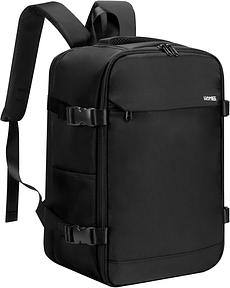
If you'd rather have a backpack-and-trolley hybrid, the SONS OF ALOHA Backpacker Rucksack mit Rollen 3 in 1 - Handgepäck Koffer Kane Hybrid Backpack-Boardgepäck mit Rollen, 55 x 40 x 20 cm - wasserabweisend recyceltes PET, schwarz is built from recycled PET. If you prefer a classic hard-shell trolley instead, the Farmhood Eco Edition Mittelgroßer Hartschalen Koffer nachhaltig | Trolley 45 x 28 x 67 cm mit Dehnfalte von 72 auf 80 Liter erweiterbar | Ultra-leicht nur 3,6 Kg is an ultra-light model with an expandable gusset.
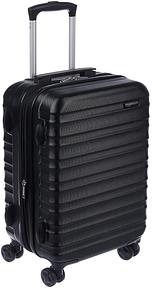
Not available in your region — closest match
Amazon Basics Hard Shell Suitcase, black
View at Amazon (as of Aug 14)Affiliate link. Buying through it earns us a commission; the price stays the same for you.
Not available in your region — closest match
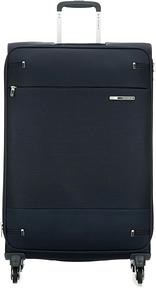
Samsonite Base Boost Weichgepäck-Koffer (66 cm)
View at Amazon (as of Aug 11)Affiliate link. Buying through it earns us a commission; the price stays the same for you.
Not available in your region — closest match
View at Amazon (as of Aug 14)Affiliate link. Buying through it earns us a commission; the price stays the same for you.
Not available in your region — closest match
Amazon Basics Hard Shell Suitcase, black
View at Amazon (as of Aug 14)Affiliate link. Buying through it earns us a commission; the price stays the same for you.
What actually makes a suitcase sustainable?
Honestly? Not the green label on the box. Three things actually matter:
Does it have GRS certification? A genuinely eco-friendly suitcase carries the Global Recycled Standard label. It audits the entire supply chain, not just the final product. No certification, no proof.
Can you repair it? Replaceable wheels and screwed-together components add years to a suitcase's life. If it's glued or riveted together, it's destined for a landfill the moment something breaks.
Is the manufacturer transparent about materials? If the website only says "eco-friendly" with no percentages or certificates, treat it as a red flag. Vague green language is the most reliable sign of greenwashing. For checking airline compatibility alongside sustainability — which carry-on actually fits which airline — our comparison test covers both.
The overlooked advantage: lighter packing thanks to recycled materials
This catches most people off guard: sustainable suitcases made from recycled polypropylene are actually 25 to 40% lighter than conventional polycarbonate models. A modern PP hardshell weighs just 2.5 to 3 kg. To see which models rank lowest on weight, check our lightest carry-on suitcases comparison.
Think that's a small detail? With Ryanair's strict 10 kg limit or Eurowings' cabin baggage rules, every gram of shell weight you save is a gram more for your belongings. A suitcase that weighs 800 grams less than the polycarbonate competition means an extra pair of shoes. Or that bulky jacket that wouldn't have fit otherwise.
Looking for a carry-on that works with Ryanair? The PP models deserve a closer look. The combination of airline-compliant dimensions and low empty weight is the best case for recycled PP luggage. No sustainability pitch required.
The short version
Sustainable luggage isn't an upgrade for eco-warriors anymore. It's lighter, costs about the same as conventional options, and EU regulations are going to make it the default within a few years anyway.
Next time you're buying a suitcase: take a look at the recycled PP models. Not because of the environmental credentials. Because 800 grams less empty weight makes a real difference when Ryanair weighs your bag.
All products from this post
The ones we named above are marked; the rest are alternatives in the same category.
Not available in your region — closest match
Samsonite Base Boost Weichgepäck-Koffer (66 cm)
View at Amazon (as of Aug 11)
Not available in your region — closest match
Amazon Basics Hard Shell Suitcase, black
View at Amazon (as of Aug 14)
Not available in your region — closest match
Amazon Basics Hard Shell Suitcase, black
View at Amazon (as of Aug 14)Affiliate notice: As an Amazon Associate, we earn from qualifying purchases. Product prices and availability are subject to change.
Frequently Asked Questions
What is rPET and why is it used for luggage?
rPET stands for recycled polyethylene terephthalate — made from old PET bottles and primarily used for suitcase linings. The material conserves raw resources and performs just as well as virgin material.
Is sustainable luggage more expensive than regular suitcases?
Not necessarily. The Hauptstadtkoffer Kotti, made from 100% recycled PP, starts at EUR 74.95. That's in line with standard hardshell suitcases. Prices for sustainable models have dropped noticeably over the past two years.
Which German brands sell sustainable luggage?
The most prominent are IMPACKT (Hamburg, GRS-certified), Hauptstadtkoffer with the Kotti line (Berlin, recycled PP), and travelite with the Mooby series (Ocean Bound Plastic). All three offer cabin-size models.
How can I spot greenwashing in luggage?
Look for specific certifications like the Global Recycled Standard (GRS) or PETA-Vegan. If a manufacturer only writes "eco" or "green" without listing recycled content percentages, be skeptical. Transparency about material sourcing is the best indicator.
Are recycled suitcases as durable as regular ones?
Yes. Recycled PP is just as impact-resistant as virgin material — Hauptstadtkoffer backs this up with a five-year warranty on the Kotti shell. It's not a weaker material. It's the same material with a better backstory.
*Last updated: May 2026*
Sources
- Market Research Future marketresearchfuture.com
- $43.77 billion in 2026 mordorintelligence.com
- Ecodesign for Sustainable Products Regulation (ESPR) green-forum.ec.europa.eu
- Federal Environment Agency umweltbundesamt.de
- announced circular economy suitcases with Digital Product Passports prnewswire.com
- IMPACKT impackt.de
- Global Recycled Standard textileexchange.org