Flashlight in Carry-On or Checked Luggage? The 2026 Rules
 7 min read
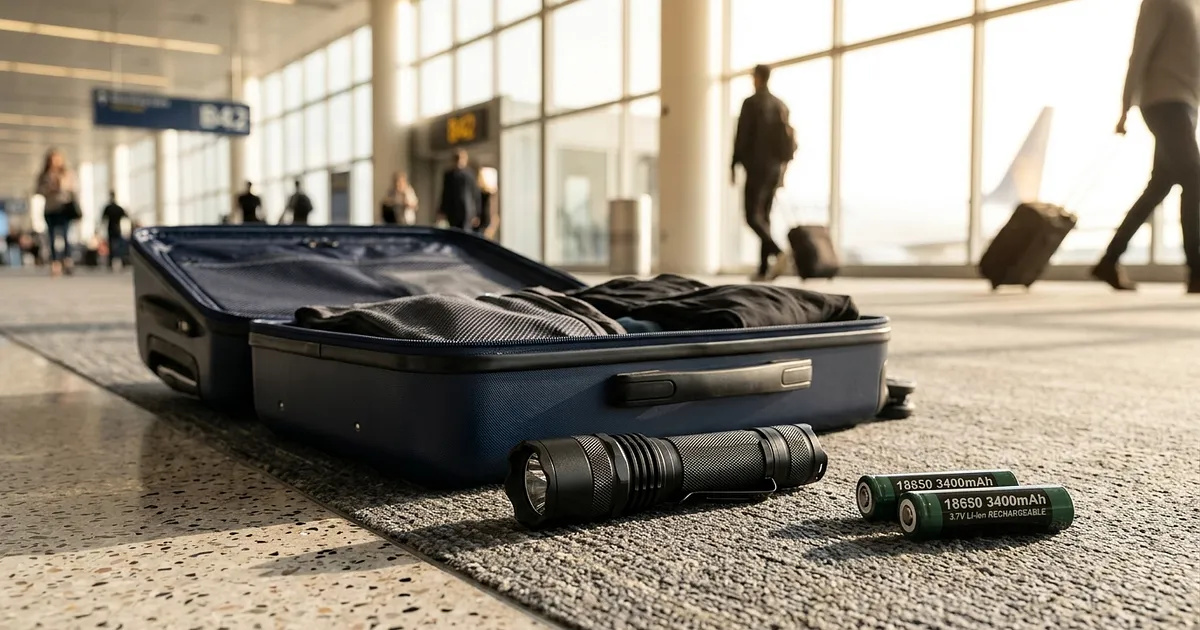
Last year at Stuttgart Airport, my buddy Matze packed his brand new LED flashlight and two spare batteries into his checked bag. Tucked away at the bottom, between hiking boots and a sleeping bag. Then came the announcement at the gate: "Passenger with bag tag XY, please report to security." The x-ray had caught the spare batteries. Half an hour delay, batteries moved to his carry-on, everyone in our group annoyed. If he'd known the rules, we'd have been on the plane already.
Short answer: You can technically pack a flashlight in both carry-on and checked luggage. But here's the catch. Lithium batteries (and honestly, almost every modern LED flashlight uses one) must travel in your carry-on per ICAO regulations. Spare batteries in checked bags are strictly banned. Full stop.
Flashlight in Carry-On: Almost Always the Right Move
Your carry-on is the safe bet. Most commercially available LED flashlights with batteries under 100 watt-hours (Wh) need no special permission. That covers basically every flashlight you'd buy in a normal store: Petzl, Fenix, Ledlenser, the Anker stuff, all well under the limit.
What security actually checks when they see a flashlight:
Is the battery built-in or removable?
Are the terminals on spare batteries protected?
Does the flashlight fall into the "weapon" category (tactical with strike bezel)?
If you can say no to all three, you're fine. Drop it in the bin, send it through, done.
One detail that gets forgotten a lot. I think most travelers don't realize this, but the flashlight should be packed so it can't switch on by accident. It happens more often than you'd expect: you unpack at the hotel, the flashlight is hot as a stove, because it's been burning on full power for six hours buried between your clothes. Either tape over the switch or use lockout mode if the light has one.
Flashlight in Checked Luggage: Allowed, but Complicated
The flashlight itself is fine. The batteries are the issue.
Built-in lithium batteries can travel in checked luggage per IATA Dangerous Goods Regulations, as long as the device is switched off and can't turn on accidentally. Loose spare lithium-ion or lithium-polymer cells? Strictly banned in checked bags. Those always stay with you in the carry-on.
The reason is pretty simple. Fire risk. A damaged lithium battery can ignite. In the cargo hold, nobody notices until it's too late. In the cabin, you see the smoke immediately, and the crew has specialized fire containment bags for exactly this situation. At least that's what I've read from the aviation safety reports.
My recommendation: just put the whole flashlight plus batteries in your carry-on. Skip the discussion, and you'll also have the light handy if your hotel hallway is pitch dark or you need to walk back to the rental car at night.
Watt-Hour Limits: Most Lights Are Fine
Quick technical bit, but stick with me.
Lithium batteries get classified by watt-hours (Wh). The number is usually printed on the battery or in the product spec sheet. For anyone who wants to check: Wh = Volts x Amp-hours.
| Battery Capacity | Carry-On | Checked Bag | Notes |
|---|---|---|---|
| Under 100 Wh | Yes, no approval needed | Only if built-in, never loose | Covers 99% of flashlights |
| 100 to 160 Wh | Yes, with airline approval | No | Max 2 spare batteries |
| Over 160 Wh | No | No | Banned on passenger flights |
For context, a standard 18650 cell (the workhorse of most flashlights) runs about 10 to 15 Wh. Even with four cells you're nowhere near the 100 Wh limit. Problems only show up with serious outdoor searchlights or headlamps that use huge external battery packs.
Headlamp in Carry-On: Same Rules as a Flashlight
Short answer: identical. Your Petzl Actik, Black Diamond Spot, Ledlenser H-series, whatever. Same rules as any flashlight.
If you're flying somewhere to hike or camp, you probably have one anyway. Into the carry-on it goes, spare batteries included. Just make sure those spare batteries are individually protected so the terminals can't touch each other. A piece of tape over the contacts or a small plastic case does the job.
For longer outdoor trips where you're juggling lots of gear, take a look at our carry-on suitcase guide. Some options there handle outdoor gear better than standard business luggage.
Tactical Flashlights: Watch the Strike Bezel
This one gets tricky.
Some flashlights have what's called a "strike bezel" (that serrated ring at the front or back, designed for emergency defense). In Germany especially, that puts the light in a gray zone. The Federal Police and customs can classify these as dangerous items and confiscate them. Sometimes as weapons.
A guy I know lost his Fenix PD36R TAC at Frankfurt Airport. 180 euros gone, because the front bezel was deemed a "blunt impact weapon." The security officer was actually polite about it. Just said, "You won't be getting this back for the return flight either."
My advice, honestly? Leave the tactical version at home. A normal LED flashlight with a smooth head works perfectly fine and creates zero hassle at security.
Common Flashlight Mistakes at the Airport
Here are four things that probably come up most often:
1. Spare batteries in checked luggage. The classic one. Banned. Leads to bag opening, delays, angry faces at the gate.
2. Unprotected battery terminals. Two batteries terminal-to-terminal in your jacket pocket? Short-circuit risk. Always pack them separately or tape over the contacts.
3. Headlamp without lockout. Rolls around in your backpack, switches on, burns for six hours, battery dead. Engage the lockout mode, or flip one battery backwards if the lamp allows.
4. Giant 20,000-lumen outdoor searchlights. You probably don't need these for normal travel. Ship them ahead or buy them at the destination. Pack something flat like the klarus E5 Mini-Taschenlampe instead. 600 lumens, smooth head, USB-C, under 40 grams. That covers everything that gets dark on a trip.
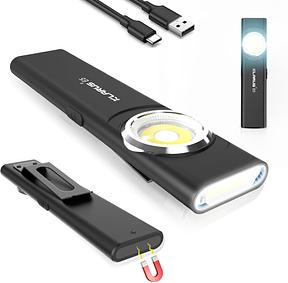
Affiliate link. Buying through it earns us a commission; the price stays the same for you.
Our Tips for Traveling with a Flashlight
What's worked well for us at Kofferly:
Always pack the flashlight in carry-on. Saves discussions, light stays reachable, batteries are safer.
Protect spare battery terminals. Small zip bags or the original blister pack are enough.
Check the watt-hour rating. Before you fly, read the product listing once. Most lights sit well below 100 Wh.
Skip the tactical lamps. Strike bezel or not, it's rarely worth the risk.
Small is usually plenty. 300 to 500 lumens handle hotel hallways, dark streets and emergencies fine.
All products from this post
The ones we named above are marked; the rest are alternatives in the same category.
Affiliate notice: As an Amazon Associate, we earn from qualifying purchases. Product prices and availability are subject to change.
Frequently Asked Questions
Can I bring a flashlight in my carry-on?
Yes. Normal LED flashlights with lithium batteries under 100 Wh are allowed in carry-on with no approval needed. Spare batteries must also be in carry-on, with the terminals protected by tape or individual packaging.
Can a flashlight go in checked luggage?
The flashlight itself can, as long as the battery is built-in and the device is switched off. Loose spare lithium batteries are strictly banned in checked bags. For simplicity, we recommend packing the entire flashlight in your carry-on.
What battery capacity is allowed?
Under 100 watt-hours (Wh) without approval. Between 100 and 160 Wh requires airline approval, with a maximum of two spare batteries. Over 160 Wh is completely banned on passenger flights. Most flashlights sit well below 100 Wh.
Are headlamps allowed in carry-on?
Yes, headlamps follow the same rules as flashlights. Pack them in carry-on with the lithium battery, keep spare batteries individually wrapped, and engage the lockout mode so the lamp can't turn on in your bag.
Will tactical flashlights be confiscated?
Sometimes. Lights with strike bezels (serrated impact rims) can be classified as dangerous items by security, especially in Germany. For flights, stick with a standard LED light that has a smooth head.
*Last updated: April 2026*