Compression Socks for Flying: Which Ones Actually Work and Which Are a Waste of Money
 14 min read
A 28-year-old woman died from blood clots after a long-haul flight. That case, reported in the Deutsches Ärzteblatt, is what made me take compression socks seriously. Not the marketing. Not the airport pharmacy display. A real person, younger than me, dead from something she probably didn't even think about.
So I looked into the products. Airport pharmacy socks for $9. Sports compression for $45. No-name Amazon pairs for $10. All promising "DVT protection during flights." But which compression socks actually work for long flights? And which ones are just throwing money away?
We compared four models against what actually matters on a long-haul flight, not just the number on the label. Not in a lab - against the real conditions of an economy seat, hour after hour.
Quick answer: Compression socks for flying make sense on flights over 4 hours, especially for risk groups. A Cochrane review of 2,637 participants shows roughly 90% reduction in DVT risk. Sounds impressive. What that actually means for you personally is in the next section.
| Model | Price | Compression | Best For | Rating |
|---|---|---|---|---|
| 360 Relief | ~$11 | Support (10-15 mmHg) | First-time buyers, short flights | 3/5 |
| CAMBIVO (2-pack) | ~$20 | Class 1 (15-21 mmHg) | Best value, long-haul | 4/5 |
| Scholl Flight Socks | ~$27 | Class 1 (18+ mmHg) | Risk groups, frequent flyers | 5/5 |
| sockenkauf24 (4-pack) | ~$24 | Support | Frequent short trips, budget | 3.5/5 |
Blood Clots on Flights: What You Actually Need to Know
Let me get the science out of the way first, because most travel blogs either skip it entirely or sensationalize it beyond recognition.
According to the WHO WRIGHT Project, the risk of blood clots roughly doubles after sitting for 4+ hours. That sounds scary. For most healthy people, the absolute risk stays low, around 1 in 6,000. But for risk groups, the picture changes.
Why planes specifically? Three things happen at once. Your legs barely move, so blood flows slower. The cabin pressure equals about 2,400 meters altitude, meaning less oxygen in your blood. And the dry cabin air dehydrates you, making your blood thicker.
You've probably heard of "Economy Class Syndrome." Honestly, it's a misleading name. DVT happens in Business Class too. More legroom helps, but the mechanism stays the same: you sit still for hours. Blood clots don't care what you paid for your ticket.
The honest number nobody mentions
90% risk reduction. Sounds like everyone should wear them, right? Hold on. The same study also shows: for healthy travelers without risk factors, the NNT (Number Needed to Treat) is 111. That means 111 healthy people need to wear compression socks to prevent one single DVT case.
That doesn't make them useless. But it puts things in perspective. For risk groups, the math changes. The NNT drops to 37. That's a meaningful difference.
Who counts as a risk group? Smokers, women on birth control pills, overweight individuals, people with varicose veins, previous blood clots, and, surprisingly to many: frequent flyers. A long-term study from Leiden University tracking 8,755 frequent flyers found more than triple the thrombosis risk compared to the general population. 53 serious thrombotic events in the study group. Among people who thought they were perfectly healthy.
Worth noting: the elevated risk stays for up to four weeks after your flight. Most clots develop within the first two weeks after landing. Watching for symptoms doesn't end when you collect your bags.
Support Stockings vs. Compression Socks: The Difference Most Sites Get Wrong
Most travel sites write "compression socks" and mean everything from the $9 airport pharmacy sock to a genuine medical device. That's like saying "vehicle" for everything from a bicycle to a truck. The difference matters.
According to medi, support stockings are NOT medical compression stockings. They provide less than 18 mmHg of pressure. They're not medical devices and can't be prescribed by a doctor.
Here's the breakdown, and why the product name tells you nothing:
| Type | Pressure (mmHg) | Medical device? | Who needs it? |
|---|---|---|---|
| Travel support socks | 10-15 mmHg | No | Healthy travelers, comfort |
| Compression Class 1 | 18-21 mmHg | Yes | Risk groups, long-haul flights |
| Compression Class 2 | 23-32 mmHg | Yes | Doctor's prescription, serious vein issues |
"Travel compression socks" or "flight socks" on the label? That's marketing. Not medicine. Look at the mmHg number, not the product name. The same applies to anything marketed as "DVT socks" or "flight socks for long haul": what matters is the mmHg value, not what they're called.
Vascular surgeon Dr. Thomas Loh recommends at least 20-30 mmHg for flights over 4 hours. That's Class 1 or higher. The $9 socks from the airport pharmacy with 12 mmHg? Better than nothing. But significantly less protection for your veins. He also notes that a sock you'll actually wear consistently beats a high-compression option you'll take off after two hours.
The Traveler Test: 4 Compression Socks on Real Long-Haul Flights
Four models, compared side by side on what actually matters, not just the number on the label. The real questions aren't "how many mmHg does it have?" They're: can you actually put it on squeezed between an economy seat and the tray table? Does it hold up over an 11-hour flight? Does it survive repeated hotel-sink hand-washes?
The criteria that matter for a traveler, not a patient:
Putting them on in-seat: Can you really do it, or do you need a changing room?
Comfort after 8+ hours: Do they still feel okay after the sixth movie?
Carry-on space: One pair takes almost nothing. Four pairs for two weeks adds up.
Look under dress pants: Not a minor point for business travelers.
Smell after 11 hours: Yes, I'm asking this. No, I'm not embarrassed.
Hotel hand-washes: Some people walk to the laundromat every evening. I wash in the sink.
Budget Pick: 360 Relief Compression Socks
The 360 Relief Kompressionsstrümpfe Damen und Herren - 1 Paar Stützstrümpfe für Sport, Laufen, Flug, Reise, Joggen, Radsport costs under $11 and has over 6,400 reviews on Amazon. For occasional flyers who just want to try compression socks on a plane for the first time, it's a fair starting point.
Reviewers describe the compression as even and the material as quick-drying. For a city trip with a flight under 6 hours, that's plenty.
On longer stretches though, several reviewers report the knee band starting to slip after a few hours, with the fabric running warm and synthetic-feeling in the second half of a long-haul flight. Not a dealbreaker, but not the most comfortable option either. Sizing runs true. For long-haul flights over 8 hours, the CAMBIVO is the better choice.
Best for: First-time buyers, flights under 6 hours, absolute entry-level budget.
Not available in your region — closest match
View at Amazon (as of Aug 14)Affiliate link. Buying through it earns us a commission; the price stays the same for you.
Best Compression Socks for Flying Under $20: CAMBIVO
The CAMBIVO Kompressionsstrümpfe Damen und Herren 2 Paar, Kompressionssocken Stützstrümpfe für Laufen, Sport, Flug, Reise, Radsport punches above its price point. Two pairs for about $20, over 20,000 reviews - numbers you wouldn't expect from a budget compression sock.
Reviewers consistently praise the fit and describe the pressure as noticeable but comfortable, holding up over repeated wear and hand-washing. Under dark pants, nobody notices them.
On compression level: the CAMBIVO are listed as Class 1 with 15-21 mmHg. Compared to the Scholl, they run slightly softer, which some travelers find more comfortable on very long flights. Odor control is also a frequently praised point in reviews.
One common criticism: the size chart runs optimistic. If you're between two sizes, order a size up.
Best for: Long-haul flights, value buyers, travelers without significant risk factors.
Not available in your region — closest match
View at Amazon (as of Aug 14)Affiliate link. Buying through it earns us a commission; the price stays the same for you.
The Pharmacy Classic: Scholl Flight Socks Class I
The Scholl Fußpflege, Flugsocken Klasse I, schwarz are probably the most recognized flight socks in Germany and much of Europe. Class I, which means genuine medical compression starting at 18 mmHg. You can feel the difference.
The Scholl socks fit noticeably tighter than the budget options. Getting them on takes some practice - a tip from frequent flyers: thin rubber gloves help with grip, and no, that's not a joke. Reviewers consistently report the compression staying stable without slipping or loosening, even over long stretches. The material feels more substantial than the cheaper models.
The support-stocking quality of the cheaper options is completely gone here. This is real, consistent pressure - the kind that gives risk-group travelers real confidence on a long-haul flight, not just a placebo.
Downside: at roughly $27 per pair, they're pricier. The size range is more limited than Amazon brands. If you fly long-haul regularly or you're in a risk group, the investment makes sense. For a once-a-year vacation flight to somewhere sunny? A cheaper option works fine.
Best for: Risk groups, frequent flyers, flights over 8 hours, people with varicose veins.
Not available in your region — closest match
View at Amazon (as of Aug 15)Affiliate link. Buying through it earns us a commission; the price stays the same for you.
Solid All-Rounder: sockenkauf24 Travel Socks
The sockenkauf24 1 | 2 | 4 Paar Stützstrümpfe Reisestrümpfe Kompressionsstrümpfe Damen & Herren Stützkniestrümpfe with over 3,500 reviews sit in the middle. Decent construction, reasonable price.
A practical plus: they come in 4-packs, useful if you want a fresh pair for every flight without washing after each one. For a two-week trip with multiple flight segments, that adds up.
Material and fit are solid, nothing exceptional. Compression sits in the support sock range rather than true Class 1. For travelers who want something better than the absolute budget option but don't want to pay pharmacy prices, a reasonable choice.
Best for: Frequent short trips, travelers wanting multiple pairs, moderate budget.
Not available in your region — closest match
View at Amazon (as of Aug 14)Affiliate link. Buying through it earns us a commission; the price stays the same for you.
Common Mistakes When Buying (and How to Avoid Them)
These mistakes are more common than you'd think.
Wrong size. The most common error. Too tight and they cut off circulation (making things worse), too loose and they do nothing. Measure your calf circumference in the morning before your legs swell. When in doubt, go one size up. Amazon brands in particular tend to run small.
Bought at the airport. Airport pharmacy socks cost twice as much and the selection is tiny. Order ahead. If you have Prime, order two sizes, try them at home, return the wrong one.
Class 2 without medical advice. Sounds like "more is better," but it's not always true. Class 2 (23-32 mmHg) is too much pressure for most healthy travelers. It gets uncomfortable, and if the sock doesn't fit perfectly, it can actually cause problems. For normal long-haul flights, Class 1 or even good support socks with 15-18 mmHg are enough.
Put them on during the flight. Compression socks go on before your legs swell. At home or at the hotel, not squeezed into an economy seat with the tray table down.
Taking them off right after landing. A lot of people strip them off the moment they leave the plane. But DVT risk stays elevated for hours after landing, especially if you're standing at baggage claim or waiting in a long immigration line. Keep them on until you're at your hotel and can actually move around.
Beyond Socks: Other Ways to Prevent Blood Clots
Compression socks are one piece of the puzzle. The German IQWiG states clearly: for healthy travelers without risk factors, compression socks aren't strictly necessary if you take other precautions.
What actually helps:
Get up and move. Walk the aisle every 1-2 hours. Sounds obvious. It's the single most important thing you can do. The German medical literature recommends every 30 minutes for at-risk travelers.
Ankle circles in your seat. Flex your toes, circle your ankles, stretch. A few minutes every hour keeps blood moving.
Drink enough water. Water, not wine. The dry cabin air dehydrates you. Drinking a lot also means you need to get up for the bathroom. Double benefit.
Choose an aisle seat. Not kidding. Aisle seats mean you're not trapped and you get up more often.
Wear loose clothing. Tight jeans and constricting shoes work against you.
There's also an underrated benefit to traveling with carry-on only: you skip the baggage carousel wait entirely, which means less standing still after a long flight. That's actually good for your legs, not just your schedule. Check out our two-week carry-on challenge if you want to see how we pulled it off.
Special Case: Frequent Flyers
Quick question: how many flights did you take last year? More than ten? Read this section twice.
The Rosendaal study followed 8,755 frequent flyers over four years. The result: more than triple the thrombosis risk compared to non-flyers. 53 serious thrombotic events in the study group. Among people who considered themselves fit and healthy.
I get it. You fly so often it becomes routine. You think you're too young, too fit, too healthy for blood clots. But the risk accumulates. The study found the highest risk among people under 30, women on oral contraceptives, and people at extreme heights or weights. The "too young to worry" logic falls apart when you look at the data.
For frequent flyers, a quality pair of Class 1 compression socks is probably worth it. The Scholl at $27 gets used on every flight. Under dress pants, nobody sees them. Under sneakers, nobody cares. If you're also thinking about how to pack light for work travel, our carry-on luggage test covers the bags that actually hold up.
My Honest Take
Do you need compression socks for flying? Honestly, it depends.
Flight under 4 hours, no risk factors? Save your money. Just move around on the plane. Get up, do ankle circles, drink water.
Flight over 4 hours, healthy with no pre-existing conditions? Even basic compression socks for flying show real benefit. A good support sock or the CAMBIVO at $20 is plenty. You don't need to spend $45 to get something out of it.
Regular long-haul traveler, risk group, or 4+ hours in the air? Invest in real Class 1 compression socks like the Scholl Flight Socks. The difference in fit, stability, and medical effectiveness is worth the extra money.
The most important thing here: the most expensive socks are useless if they don't fit. Take time to measure properly. Order two sizes. Try them at home. That matters more than the brand. Honestly, more than anything else in this article.
All products from this post
The ones we named above are marked; the rest are alternatives in the same category.
Not available in your region — closest match
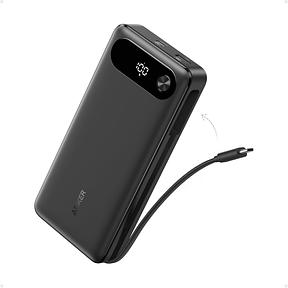
Anker Powerbank, 20.000mAh tragbares Ladegerät mit integriertem USB-C-Kabel, 87W Max Schnellladung, kompatibel mit MacBook, iPhone, Samsung und mehr
View at Amazon (as of Aug 15)
Affiliate notice: As an Amazon Associate, we earn from qualifying purchases. Product prices and availability are subject to change.
Frequently Asked Questions
Do compression socks actually help on flights?
Yes, especially on flights over 4 hours. A Cochrane review shows roughly 90% reduction in DVT risk. For healthy travelers without risk factors, the individual risk is low (NNT of 111, meaning 111 people need to wear them to prevent one case), but risk groups benefit significantly more with an NNT of 37.
What compression level do I need for flying?
Most travelers need Class 1 (18-21 mmHg). Class 2 (23-32 mmHg) only with medical advice. Even lighter support socks at 10-15 mmHg show some benefit in studies, but offer less protection than medical-grade compression. Dr. Loh recommends at least 20-30 mmHg for flights over four hours.
How long before a flight should I put on compression socks?
Put them on before your legs start swelling. Ideally in the morning at home or at your hotel before heading to the airport. Trying to put on compression socks in an airplane seat is difficult and frustrating. The WHO recommends precautions for any flight over 4 hours.
Can I wash compression socks in a hotel sink?
Yes, most can handle hand-washing. Use lukewarm water and mild soap, then air dry. Avoid wringing them out, as this damages the compression fibers. The CAMBIVO and sockenkauf24 models are widely reported to survive multiple hand-washes without losing noticeable compression.
What's the difference between support socks and compression socks for flying?
Support socks provide less than 18 mmHg pressure and aren't medical devices. Medical compression socks Class 1 (18-21 mmHg) are tested and certified, providing stronger, more consistent pressure. Doctors recommend at least Class 1 for actual DVT prevention. Look at the mmHg number on the label, not terms like "flight socks" or "travel socks" which are marketing, not medical specifications.
How long does DVT risk stay elevated after flying?
The risk remains elevated for up to 4 weeks after your flight. Most clots develop within the first two weeks after landing. Watch for swelling, pain, or discoloration in your legs, and see a doctor if you notice any symptoms. Keeping compression socks on during baggage collection and the journey home is a sensible precaution.
*Last updated: June 2026*