2-Liter Rule 2026: Which EU Airports Allow Large Liquids in Carry-On
 6 min read
You're at the Frankfurt gate. That 1.5-liter water bottle in your carry-on sailed through security. Two weeks later, return flight from Barcelona: Same bottle gets confiscated.
Welcome to the world of the 2-liter rule. Or better: the non-rule.
Since July 2025, some EU airports allow up to 2 liters of liquids in carry-on. Others stick to the old 100ml limit. And most? They're somewhere in between. Sometimes even terminal by terminal at the same airport.
Quick Answer: Currently Dublin, Rome, Bologna, and Milan Linate allow up to 2 liters of liquids in carry-on. Frankfurt, Munich, and Berlin have CT scanners only at some checkpoints. Keep packing by the 100ml rule to avoid problems.
The Tech Behind the Chaos
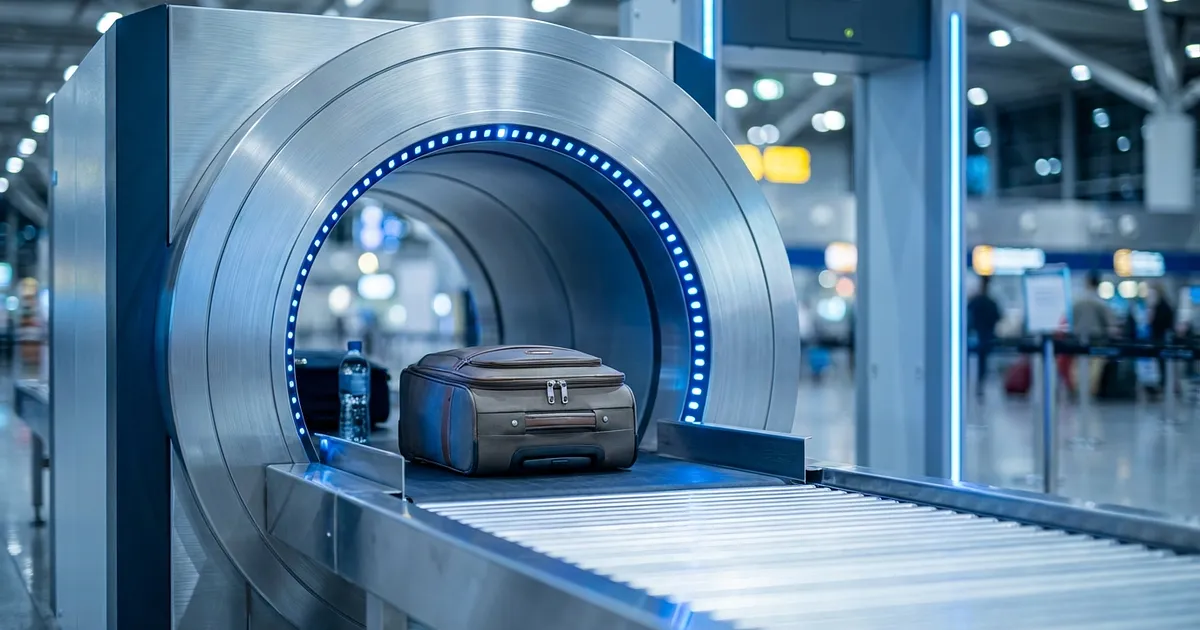
CT scanners. That's why some airports are now more generous with liquids in carry-on.
The European Commission approved certain C3 scanners for airport use in July 2025. These devices use computed tomography (same technology as in hospitals) and can analyze liquids directly in your bag without unpacking.
Sounds good, right? It is. With one catch:
A single C3 scanner costs between 200,000 and 300,000 euros. According to ACI Europe, that's roughly 8 times more than conventional X-ray machines. Operating and maintenance costs run 4 times higher. For Frankfurt with 160 lanes, we're talking at least 32 million euros. Without maintenance.
That's why the rollout is taking so long.
Which Airports Allow 2 Liters of Liquids in Carry-On?
Fully converted:
Dublin (DUB): Dublin Airport upgraded all terminals by September 19, 2025. The 100ml rule is history there. Passengers can easily transport larger liquids in carry-on here.
Rome Fiumicino (FCO): Rome Airport has allowed 2 liters since July 2025. But watch out: Flights to the US or Israel still follow the 100ml rule.
Bologna and Milan Linate: Also fully converted.
Partially converted (here's where it gets tricky):
Frankfurt (FRA): The classic case. Out of 160 security lanes, only 40 have the new scanners. That's 25%. In other words: You have a 1-in-4 chance your big water bottle makes it through. The other three times? Trash. At Frankfurt Airport, regulations for liquids in carry-on remain inconsistent.
Munich (MUC): Munich Airport is investing 45 million euros in 60 CT scanners. All 48 lanes should be equipped by summer 2026. Currently, regulations for liquids in carry-on are still inconsistent.
Berlin (BER): At Berlin Airport, 24 of 42 lanes have CT scanners. But an official rule change? Nothing announced.
CT scanners installed, but 100ml rule still applies:
Spanish airports like Madrid and Barcelona already have the technology installed. The 2-liter rule hasn't been activated though. The reason: EU regulations require additional certifications first.
Classic bureaucracy: Tech ready, permission missing.
The Real Problem: Chaos Instead of Clarity
Even Frankfurt Airport recommends that passengers keep following the old 100ml rule for carry-on liquids. Why? Because nobody knows which security lane they'll be assigned before arriving.
Then there's the return flight problem. Your outbound flight might leave from Dublin with the 2-liter rule. But if you fly back from a different airport, the 100ml limit could apply. Your big water bottle gets confiscated. Budget airlines especially (like Ryanair) enforce their carry-on rules strictly. Every centimeter and every gram counts.
My honest advice: Pack like the 2-liter rule doesn't exist. If you happen to get a modern lane, that's a bonus. But counting on it? Forget it.
Liquids in Carry-On: Practical Tips for the Transition Period
Until the EU figures this out (so: probably 2030), small containers remain the only safe strategy.
For liquids in carry-on that absolutely need to make it through, the 4 Stück Silikon Reiseflaschen für Toilettenartikel Mit Etiketten, Reise Flaschen zum Befüllen, 100ML Auslaufsichere Reiseflaschen Behälter Set für Shampoo und Conditioner are perfect. Fill, pack, pass through any checkpoint. Works in Dublin just like it does in Madrid.
If you want to play it safe, pack your toiletries in a Lermende Transparent Toiletry Bag, Liquid Bag, Hand Luggage, TSA Approved Cosmetic Bag. It fits in any carry-on and meets the traditional TSA requirements.
For longer trips with multiple products, the BAGSMART Kulturbeutel kulturtasche Damen, Kulturtasche zum Aufhängen, Toiletry Bag Kosmetiktasche Reise Waschtasche Transparent für Makeup, Toilettenartikel (M-schwarz) works well. Bigger capacity, but still organized. The same bag also comes as the BAGSMART Kulturbeutel zum Aufhängen - Toiletry Bag für Reise in pink, if black isn't your thing.
For the big water bottle problem, there's a simple trick: a collapsible bottle like the Hydrapak, Stow (500ml) Rot- Zusammenklappbare Wasserflasche - Ultraleichte & verpackbare Reiseflasche, flexible Ski-, Wander-, Fahrrad- oder Kletterflasche, carried through security empty and only filled up past the checkpoint.
Also make sure your carry-on luggage meets your airline's size requirements. In our carry-on dimensions comparison, you'll see at a glance which dimensions each airline allows. If you're still looking for the right carry-on for this transition period, check out our test of budget suitcases under $50.
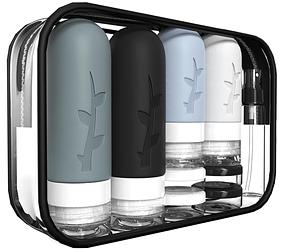
Not available in your region — closest match
View at Amazon (as of Aug 14)Affiliate link. Buying through it earns us a commission; the price stays the same for you.
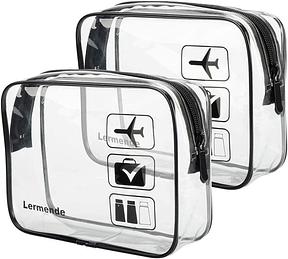
Lermende Transparent Toiletry Bag, Liquid Bag, Hand Luggage, TSA Approved Cosmetic Bag
View at Amazon (as of Aug 11)Affiliate link. Buying through it earns us a commission; the price stays the same for you.
Not available in your region — closest match
View at Amazon (as of Aug 14)Affiliate link. Buying through it earns us a commission; the price stays the same for you.
Not available in your region — closest match
View at Amazon (as of Aug 14)Affiliate link. Buying through it earns us a commission; the price stays the same for you.
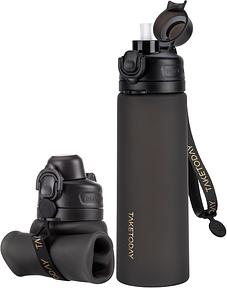
Not available in your region — closest match
View at Amazon (as of Aug 15)Affiliate link. Buying through it earns us a commission; the price stays the same for you.
What's Next for Liquids in Carry-On?
According to European Newsroom, roughly 700 CT scanners are currently in use or being installed across 21 EU countries. These devices should eventually enable carrying larger liquids in carry-on.
Germany aims to equip all major airports by the end of 2026. Frankfurt installed its first scanners in 2022. Now, four years later, only a quarter of the lanes run with new tech. So "end of 2026" could also mean "early 2027."
Spain should follow in 2026. But an EU-wide mandate? Doesn't exist. Each airport decides for itself.
The original 100ml rule has been around since 2006. (Yes, really. Nearly 20 years of the same annoying procedure.) After nearly 20 years, things are finally changing. Just not everywhere at once.
All products from this post
The ones we named above are marked; the rest are alternatives in the same category.
Affiliate notice: As an Amazon Associate, we earn from qualifying purchases. Product prices and availability are subject to change.
Frequently Asked Questions
Can I bring 2 liters of liquid in my carry-on now?
Depends. (The most annoying answer, I know.)
In Dublin or Rome? Yes, no problem. In Frankfurt, Munich, or Berlin? Maybe. If you get the right security lane. Everywhere else? Probably not.
My advice: For liquids in carry-on, keep packing the 100ml bottles. If your big bottle makes it through, great. The other way around just frustrates you.
Do I still need the clear plastic bag for liquids in carry-on?
In Dublin or Rome, you don't need the bag anymore. But in Frankfurt? You won't know which lane you'll get beforehand. So: Bring the bag. Costs nothing, saves hassle.
What is a C3 scanner?
A C3 scanner uses computed tomography to create 3D images of luggage. Security staff can analyze liquids without requiring you to unpack. The technology costs significantly more than standard X-ray machines. Hence the slow rollout.
Do EU rules apply for flights to the US?
No. Even at airports with full 2-liter approval (like Rome Fiumicino), flights to the US still follow the 100ml rule from TSA. That's due to stricter US security requirements.
Which German airports already allow 2 liters?
Frankfurt, Munich, and Berlin have CT scanners partially deployed. Which lane you get is random though. So the rule remains: Pack according to the 100ml limit.
When will all EU airports be converted?
There's no binding deadline. Germany targets the end of 2026. (Spoiler: That won't happen.) But these are national goals, not EU requirements. Full conversion will still take years.
*Last updated: January 2026*
Sources
- European Commission transport.ec.europa.eu
- ACI Europe aci-europe.org
- Dublin Airport irishtimes.com
- Rome Airport expatslivinginrome.com
- Frankfurt Airport hessenschau.de
- Munich Airport businesstraveller.com
- Berlin Airport airportindustry-news.com
- Madrid and Barcelona lovinglifeinspain.com
- Frankfurt Airport recommends frankfurt.t-online.de
- European Newsroom europeannewsroom.com
- Germany aims visahq.com