Editorial Team
Our content team
12 min read
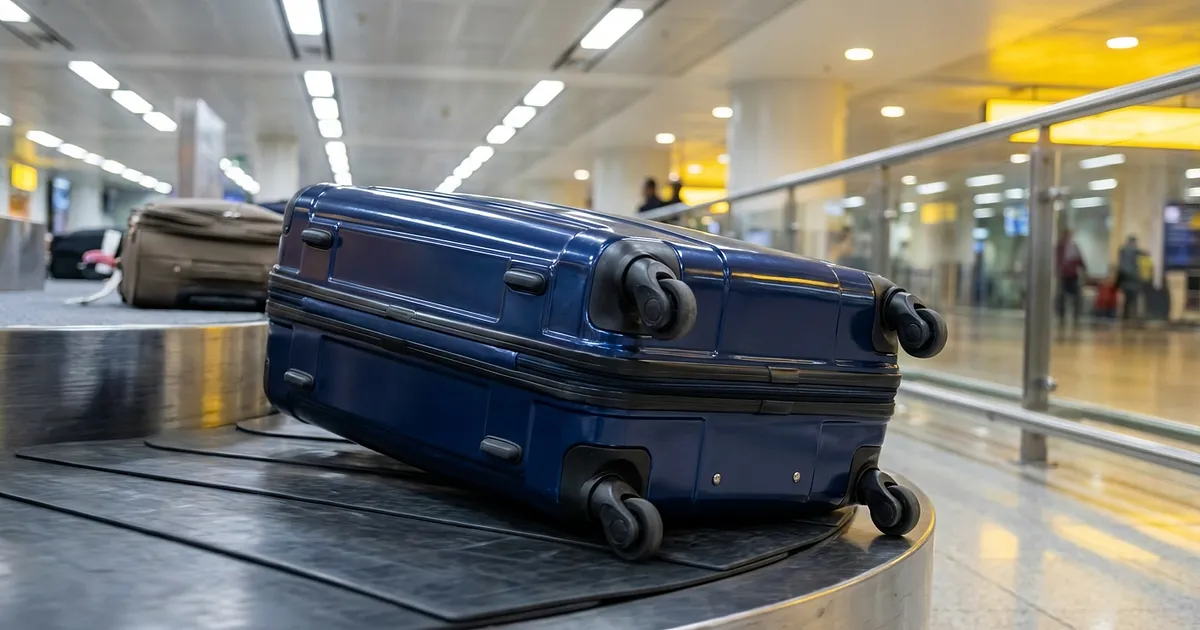
I was standing at the baggage carousel last week watching a suitcase crash onto the floor from about six feet up. The owner next to me went pale. The suitcase? A cheap ABS model that cost 35 euros. The wheels were destroyed.
This happens more often than you think. According to SITA Baggage IT Insights 2024, 6.3 out of every 1,000 bags are mishandled globally. 18% of those are damaged or pilfered. That amounts to roughly 6 million suitcases per year.
That's exactly why looking at hard shell suitcases makes sense. But which ones actually hold up? I spent three weeks comparing current hard shell suitcase test results, talking with material experts, and reviewing real user experiences. What I found debunks some expensive myths.
Before we get into recommendations, here's a story that changes everything.
Stiftung Warentest (Germany's equivalent to Consumer Reports) conducted a comprehensive hard shell suitcase test in 2021. 18 models, brutal stress tests, clear results. The hard shell suitcase test by Stiftung Warentest remains the most reliable reference to this day. This is where it gets interesting.
The Rimowa Topas Cabin at 630 euros failed completely. After a simulated drop from one meter height, the wheels were unusable. Just broken. For a suitcase that costs more than some people's annual vacation.
At the same time, the Samsonite Neopulse at around 220 euros earned the top score of 1.7 (German grading where 1 is best). It survived everything. Pressure test with 100 kilograms. Drops. Kilometers of rolling.
What does this tell us? Expensive brands are no guarantee of durability. The hard shell suitcase test shows: It comes down to material, build quality, and especially the weak points.
The biggest mistake when buying luggage? Thinking all hard shell is the same. A 40-euro ABS suitcase looks almost identical to a 200-euro polycarbonate model. Until the first flight. Then you notice the difference.
Our hard shell suitcase test shows: The material determines durability, weight, and ultimately your travel experience.
Polycarbonate is more than twice as strong as ABS plastic. The key advantage: It stays flexible under pressure and springs back to its original shape. ABS? That just cracks.
You can test this yourself. Press on the shell. Good polycarbonate springs back. Cheap ABS stays dented. Or snaps.
ABS suitcases are light and affordable. For one or two trips per year? Totally fine. But don't expect miracles. The hard shell suitcase test by Stiftung Warentest showed: Budget ABS models passed the 100kg pressure test but failed drop tests.
According to Travelpro's materials guide, polypropylene offers a balanced combination of lightness, durability, and affordability. Less known than polycarbonate, but a smart choice for price-conscious frequent travelers.
In the current hard shell suitcase test, polypropylene models score particularly well for value.
I've organized hardside luggage into three categories. Not by price alone, but by usage scenarios and test results.
For occasional travelers with one to five flights per year. Here it's all about maximum value for money in hard shell suitcases.
The BEIBYE Hartschalenkoffer Trolley Koffer Reisekoffer Handgepäck is a typical budget hardside luggage option in this class. Over 13,000 reviews, solid average rating. For 40 euros you get a functional suitcase that works for a beach vacation.
Watch out for the weak points though. Wheels, telescopic handle, zippers. That's where manufacturers cut corners first.
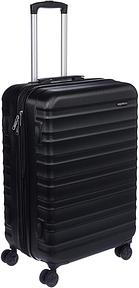
A better budget pick: The Amazon Basics Erweiterbarer Hartschalenkoffer ABS-Reisegepäck mit 4 Spinner-Doppelrollen, kratzfest und leicht from AmazonBasics. Nearly 57,000 reviews speak for themselves. Build quality is solid, and at just under 58 euros you're still in budget territory.
For a bit more, there's the COOLIFE Hartschalen-Koffer Trolley Rollkoffer Reisekoffer. COOLIFE has one of the best ratings in its price class at 4.6 stars and costs under 60 euros.
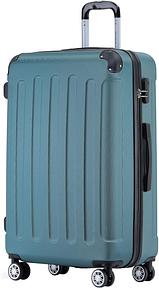
BEIBYE Hartschalenkoffer Trolley Koffer Reisekoffer Handgepäck
The sweet spot for frequent travelers. This is where the balance between cost and lifespan makes sense.
The Hauptstadtkoffer Mitte - Großer Hartschalenkoffer, TSA, 4 Rollen, Check-In Gepäck mit 8 cm Volumenerweiterung, 77cm, 130 Liter, Dunkelblau is a prime candidate. The Berlin-based brand Hauptstadtkoffer focuses on thoughtful details: rubberized 360-degree double wheels with aluminum cores, replaceable wear parts. That's smart. When a wheel breaks, you swap it out instead of trashing the entire suitcase.
Experts at MeYouAndTheWorld identify wheels, telescopic handles, and zippers as the most common failure points on cheap hard shell suitcases. The Hauptstadtkoffer addresses exactly these issues.
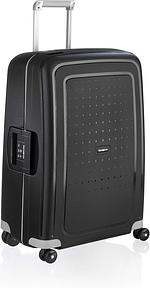
My favorite in this category: The Samsonite S'Cure Spinner Koffer. The Samsonite S'Cure is the little brother of the Stiftung Warentest winner. Polypropylene shell, three-point locking system, and nearly 20,000 satisfied buyers. At 130 euros, that's a genuine bargain. According to the current hard shell suitcase test, the Samsonite S'Cure with polypropylene shell is an excellent choice for most travelers.
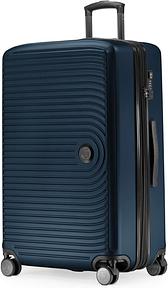
Hauptstadtkoffer Mitte - Großer Hartschalenkoffer, TSA, 4 Rollen, Check-In Gepäck mit 8 cm Volumenerweiterung, 77cm, 130 Liter, Dunkelblau
For frequent flyers with 30 or more trips per year. Maximum longevity is the priority here.
Interestingly, the search for the best hard shell suitcase doesn't end with premium brands. Stiftung Warentest shows that expensive doesn't automatically mean better. The 630-euro Rimowa failed, the 220-euro Samsonite won. I'd rather invest in a high-quality value suitcase and replace it if needed after years than blindly trust luxury brands.
I know the feeling: You're standing at the gate, your suitcase is perfect, the shell will last forever. Then the gate agent says: "That won't fit. 50 euro check-in fee." Because your suitcase is 1 cm too wide.
That's why dimensions matter more than brand.
Ryanair allows carry-on dimensions of 55x40x20 cm and maximum 10 kg. Sounds generous? It's not. That 20 cm depth is the problem. Most standard suitcases are 23 cm. Three centimeters that can cost you 25 euros.
Practical tip: A suitcase weighing 3 kg leaves you 7 kg for packing. A 4.5 kg model leaves only 5.5 kg. That makes a difference.
More about Ryanair baggage rules and suitcase recommendations (Coming Soon) in our detailed guide with guaranteed-to-fit models.
Lufthansa allows 55x40x23 cm and up to 8 kg in Economy Class for the main carry-on. Those extra 3 cm of depth compared to Ryanair might sound minor, but it means noticeably more packing volume.
Good news: Lufthansa rarely checks dimensions. Bad news: 8 kg is reached quickly, and they do weigh more often. More about Lufthansa carry-on rules in detail (Coming Soon) in our airline guide.
Eurowings follows Lufthansa: 55x40x23 cm. Basic fare allows only a small personal item, Smart and Best fares get the full trolley. Learn more about which suitcases actually work for Eurowings (Coming Soon).
Our hard shell suitcase test shows: Suitcases rarely fail at the shell. The problems sit elsewhere.
You know what breaks first? The wheels. Always. Whether it's a 50-euro suitcase or a 500-euro Rimowa.
According to Travelpro, inline wheels (2 wheels) are significantly more durable than spinner wheels (4 wheels). The reason: Spinner wheels are smaller, stick out more, and break more easily - especially on cobblestones.
Spinner wheels break more often on cobblestones, Travelpro's comparison analysis notes. For city trips to Munich, Cologne, or Rothenburg, think carefully about whether you really need four wheels.
What makes good wheels? Rubber coating instead of hard plastic. Aluminum core instead of all-plastic. Double wheels instead of single wheels.
My first suitcase? The handle jammed after three flights. Standing at the train station, handle stuck, had to drag the suitcase by the shell. Since then I pay attention to the mechanism.
The handle gets extended and retracted hundreds of times daily. Cheap mechanisms give up after a few trips. Look for: Multiple rivets instead of just clips. Sturdy aluminum tubes. Smooth but firm locking.
Single zippers are invitations for thieves. A ballpoint pen is enough to open them. Double zippers with TSA locks are mandatory for any checked luggage.
Many people buy based on price. Our hard shell suitcase test recommends: Calculate by usage.
An 80-euro ABS suitcase that breaks after 10 trips: 8 euros per use.
A 200-euro polycarbonate suitcase that survives 50 trips: 4 euros per use.
Then there are hidden costs. What do you do when your suitcase breaks during vacation? Emergency purchase on site. Stress. Lost time. If weight is especially important to you, like for Ryanair's 10 kg limit, check out the lightest carry-on suitcases in our test - we feature models under 2.5 kg.
The 'press test' is a reliable quality indicator according to German suitcase experts: Good polycarbonate returns to shape, cheap ABS cracks. Do this test in the store. Press on the shell. If it dents and doesn't spring back, walk away.
Travelers often worry about scratches. Understandable. But did you know scratches are purely cosmetic? They don't weaken the structure.
Scratches on dark suitcases can be removed with acrylic polish, while light-colored cases take standard polishing paste.
My tip: Choose a dark or metallic color from the start. Black, dark blue, anthracite. These hide scratches much better than white or light pastels.
In case you're wondering how these test results happen: The Stiftung Warentest methodology is brutally honest.
Suitcases are loaded with 32 kg and dropped from one meter onto steel plates. This simulates rough airport handling. Plus a 100 kg pressure test and over 48 kilometers of obstacle course rolling.
And this is where the 630-euro Rimowa failed. Not the pressure test. The drop test. The wheels were useless afterward.
The Rimowa Topas Cabin failed the Stiftung Warentest drop test. The wheels became unusable after the drop. This shows: Brand name is no guarantee.
Let me summarize what makes sense for whom.
Occasional travelers (1-5 flights per year):
The COOLIFE Hartschalen-Koffer Trolley Rollkoffer Reisekoffer or Amazon Basics Erweiterbarer Hartschalenkoffer ABS-Reisegepäck mit 4 Spinner-Doppelrollen, kratzfest und leicht. Budget-friendly, solid reviews, enough for the annual vacation. For even more budget options, check out our carry-on suitcases under 50€ detailed test (Coming Soon).
Regular travelers (6-20 flights per year):
The lightweight hard shell suitcase Samsonite S'Cure Spinner Koffer or the hardside luggage Hauptstadtkoffer Mitte - Großer Hartschalenkoffer, TSA, 4 Rollen, Check-In Gepäck mit 8 cm Volumenerweiterung, 77cm, 130 Liter, Dunkelblau. Here the investment in better materials and replaceable parts pays off.
Frequent flyers (20+ flights per year):
Go for a quality polycarbonate suitcase in the value range. The Samsonite S'Cure is a solid foundation. Or look for models with spare part guarantees.
Ryanair regulars:
Pay close attention to the 55x40x20 cm limit. Better to buy slightly smaller and never have problems than argue at the gate.
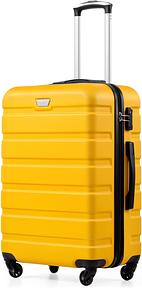
COOLIFE Hartschalen-Koffer Trolley Rollkoffer Reisekoffer
The hard shell suitcase test 2026 shows a clear picture: Even in the current luggage test, expensive doesn't automatically mean better. The Rimowa failure at Stiftung Warentest proved that.
What matters: Material (polycarbonate or polypropylene), build quality (especially wheels, handle, zipper), and an honest cost-per-use calculation.
My personal favorite for most travelers? The Samsonite S'Cure. Or the Hauptstadtkoffer Mitte if you value replaceable parts.
If you want to compare hard shell with soft shell suitcases, check out our comprehensive carry-on luggage test - we compared both material types head-to-head.
My advice: Go to the store (or order two models to your home). Press on the shell - does it spring back? Try the telescopic handle - does it run smooth? Spin the wheels - do they wobble?
If you do these three checks, you'll find the right suitcase. No matter what's on the logo.
As an Amazon Associate, we earn from qualifying purchases. Product prices and availability are subject to change.

Join thousands of smart travelers. Get exclusive airline baggage guides, packing hacks, and luggage reviews delivered weekly.