Editorial Team
Our content team
13 min read
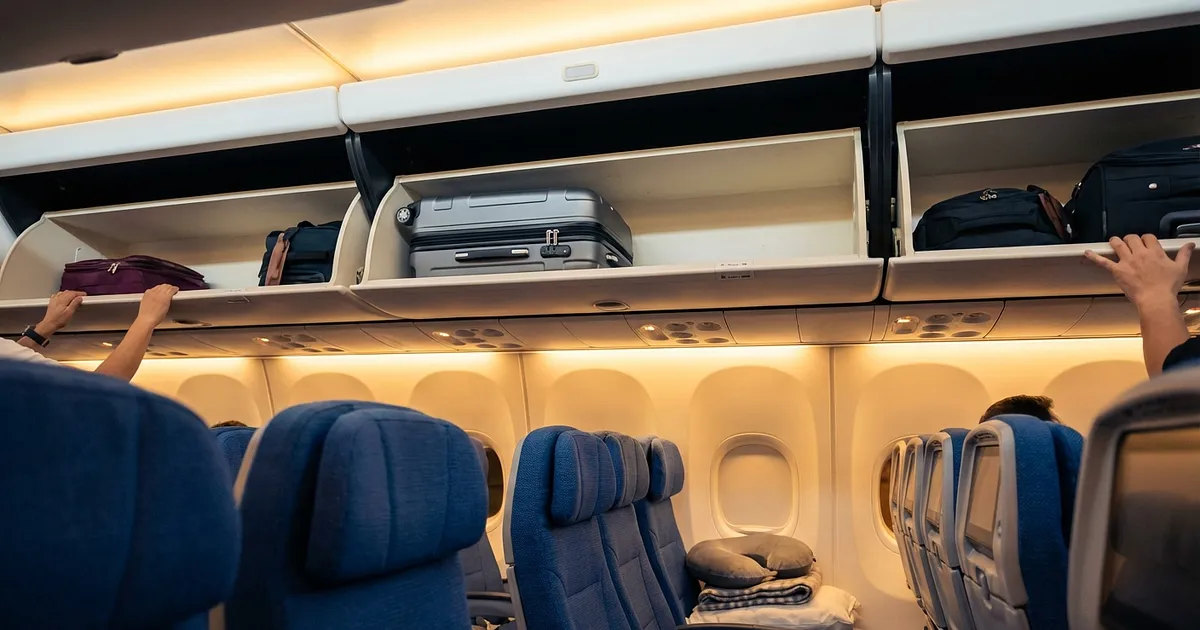
55 euros at the gate. For a bag that flew perfectly fine on Lufthansa. On the return flight with Ryanair? Suddenly it didn't fit anymore. The difference? 3 centimeters.
I've been there. And if you fly different airlines, you probably have too. Carry-on luggage dimensions vary so much that a perfectly compliant bag on Airline A becomes an expensive problem on Airline B.
The frustrating part: There's no EU-wide regulation for carry-on sizes. According to ADAC, each airline sets its own rules. And they change regularly.
In this guide, you'll find all current carry-on dimensions for 2026. After my Ryanair disaster, I spent three weeks researching. Measuring bags. Comparing airline rules. And I discovered: Most carry-on bags are optimized for ONE airline and useless for three others.
Short answer: IATA tried. And failed.
In 2015, the International Air Transport Association launched the "Cabin OK" initiative to create a global standard. 55x35x20 cm was supposed to work for everyone. That would have meant 40% less volume than previous guidelines.
The backlash was massive. North American passengers protested. Not a single US airline supported the proposal. A US congressman even introduced the "Carry-On Freedom Act" to block size reductions. Within a week, IATA withdrew the initiative.
Since then: Every airline does its own thing.
That's why Lufthansa allows 55x40x23 cm while Ryanair sticks to 55x40x20 cm. The 3 cm depth difference sounds minor. But it's about 15% more volume. And those exact 3 cm can cost you 50 euros at the gate.
Here's the overview I check before every booking. Sorted by airline type, because rules follow business models.
How to use this table: Look up your booked airline. Note the carry-on dimensions. Then DON'T just buy any 55cm bag. The details in width and depth make the difference.
| Airline | Dimensions (cm) | Weight | Additional Bag | Notes |
|---|---|---|---|---|
| Lufthansa | 55x40x23 | 8 kg | 40x30x10 | Business: 2 pieces |
| Austrian Airlines | 55x40x23 | 8 kg | 40x30x10 | Lufthansa Group |
| Swiss | 55x40x23 | 8 kg | 40x30x10 | Lufthansa Group |
| Turkish Airlines | 55x40x23 | 8 kg | 40x30x15 | Business: 2x8 kg |
| KLM | 55x35x25 | 12 kg | 40x30x15 | Higher weight limit |
| Air France | 55x35x25 | 12 kg | 40x30x15 | Same as KLM |
| British Airways | 56x45x25 | 23 kg | 40x30x15 | Very generous |
| Airline | Dimensions (cm) | Weight | Additional Bag | Notes |
|---|---|---|---|---|
| Ryanair (Priority) | 55x40x20 | 10 kg | 40x20x25 | Without Priority: small bag ONLY |
| Ryanair (no Priority) | only 40x20x25 | 10 kg | - | Trolley must be checked |
| EasyJet | 56x45x25 | unlimited | 45x36x20 | Larger bag at no extra cost |
| Eurowings (BIZclass) | 55x40x23 | 8 kg | 40x30x10 | Basic: smaller dimensions |
| Eurowings (Basic) | 40x30x25 | 8 kg | - | No trolley in basic fare |
| Wizz Air (Priority) | 55x40x23 | 10 kg | 40x30x20 | Without Priority: small bag only |
| Condor | 55x40x20 | 8 kg | 40x30x10 | Premium Economy: 10 kg. Full Condor baggage rules |
| Airline | Dimensions (cm) | Weight | Additional Bag | Notes |
|---|---|---|---|---|
| TUIfly | 55x40x20 | 6 kg | 40x30x15 | Low weight limit |
| SunExpress | 55x40x20 | 8 kg | 40x30x15 | Turkey specialist |
| Corendon | 55x40x20 | 8 kg | 40x30x20 | Mallorca, Turkey |
| Pegasus | 55x40x20 | 8 kg | 40x30x15 | Strict controls |
See the pattern? Budget airlines live on baggage fees. Premium airlines compete for loyalty. That's why Lufthansa rules are more generous than Ryanair's, even though both operate from Germany. Business model beats logic.
Important: These specifications apply to Economy class and may change. Always check current rules on the airline website before booking.
Ryanair is the airline with the strictest controls. And the most surprises at the gate.
The rules are complicated but important: With the regular basic fare, you're only allowed a small bag. Maximum 40x20x25 cm. That fits under the seat in front, but no regular trolley.
If you want to bring a cabin trolley, you need Priority Boarding. Then 55x40x20 cm plus the small bag is allowed. That costs between 8 and 25 euros extra depending on the route.
According to recent reports, Ryanair checks very strictly. Staff at the gate have financial incentives to catch oversized bags. A gate check-in costs 55 euros. More than the Priority Boarding itself.
My tip: If you fly Ryanair frequently, get a bag that measures exactly 55x40x20 cm. Not 21 cm, not 23 cm. Exactly 20 cm deep. And measure the external dimensions including wheels and handles. In our comprehensive Ryanair hand luggage guide, you'll learn all the tricks to avoid those €70 gate fees.
With Lufthansa and the entire Lufthansa Group (Austrian, Swiss, Brussels Airlines), you have more flexibility.
The official Lufthansa regulations allow 55x40x23 cm and 8 kg. Plus a small bag of 40x30x10 cm. In Business Class, you can even bring two large pieces.
The 8 kg weight limit is the only thing to watch. Compared to British Airways (23 kg) or KLM (12 kg), that's on the tighter side.
Practical note: Lufthansa checks less frequently than budget airlines. But on full flights, they measure at the gate too. Especially on popular routes to Mallorca or Turkey. In our detailed Lufthansa carry-on guide, you'll learn all about tolerances and which bags fit best.
Eurowings has three fare classes with completely different carry-on rules. This regularly causes confusion.
Basic fare: Only a small bag (40x30x25 cm). No trolley. If you want to bring a wheeled bag, you need to check it or upgrade.
Smart fare: One carry-on up to 55x40x23 cm and 8 kg. Plus the small bag. This matches the Lufthansa rules.
BIZclass: Same as Smart, but with additional perks (Priority, lounge access, etc.).
The catch: Many book the cheap Basic fare and then show up at the gate with their 55cm trolley. The rebooking fee for checked baggage is usually more expensive than the fare difference would have been. In our comprehensive Eurowings guide, we show which fare makes sense for you.
The different carry-on dimensions between Eurowings fares often lead to misunderstandings. If you have a 55x40x23 cm bag that works for Lufthansa, you can use it with Smart and BIZclass fares too.
3 centimeters. Sounds like nothing. But it's the reason why your "universal" carry-on bag suddenly doesn't work on Ryanair.
This difference confuses most travelers. And it's the reason for countless gate fees.
55x40x23 cm allows about 50.6 liters of volume. 55x40x20 cm only 44 liters. That's roughly 15% more packing space with the larger dimensions.
Where 55x40x23 cm fits:
Lufthansa Group (Lufthansa, Austrian, Swiss)
Turkish Airlines
Wizz Air (with Priority)
Eurowings (Smart/BIZclass)
Where only 55x40x20 cm is allowed:
Ryanair
EasyJet (despite larger outer dimensions, strict 20cm depth for trolleys)
Condor
TUIfly
SunExpress
Pegasus
If you fly different airlines, the safe choice is a bag with 20 cm depth. It fits everywhere.
An alternative: Bags with expandable compartments. They can stretch from 20 cm to 23 cm. Practical for Lufthansa flights, compact for Ryanair.
After years of trial and error with various bags, I've landed on a simple rule: Buy right once, and you're done. In our comprehensive carry-on luggage test 2026, we tested 7 models in real flight scenarios. Here are the top picks:
If you switch between Lufthansa and Ryanair like I do, you need a bag that fits ALL airlines. The Samsonite Base Boost - Handgepäck Koffer 55 x 40 x 20 cm, mit 2 Rollen, Weichgepäck Kabinenkoffer für die meisten Airlines geeignet, inkl. Ryanair & EasyJet, TSA-Schloss, Leicht, 41 L, Schwarz (Black) at exactly 55x40x20 cm is the Swiss Army knife of carry-ons.
What stands out: After 50+ flights, it doesn't look beat up. Polyester forgives scratches better than hard shells. The wheels? Still roll like day one.
Buy this if: You fly often and don't want to worry about dimensions every time. It fits everywhere.
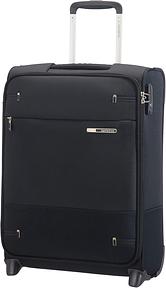
Samsonite Base Boost - Handgepäck Koffer 55 x 40 x 20 cm, mit 2 Rollen, Weichgepäck Kabinenkoffer für die meisten Airlines geeignet, inkl. Ryanair & EasyJet, TSA-Schloss, Leicht, 41 L, Schwarz (Black)
Not everyone flies 30 times a year. If you travel 3-5 times and don't need a premium bag: The Cabin Max Anode Handgepäck Koffer 55x40x20 - Leicht, Hartschale, Handgepäck Trolley mit 4 Rädern for ~60 euros is your friend. Over 14,000 Amazon reviews. That doesn't happen by accident.
Hard shell, 55x40x20 cm, 2.5 kg weight. Everything done right.
Buy this if: You need solid carry-on but don't want to spend 80+ euros. Good middle ground.
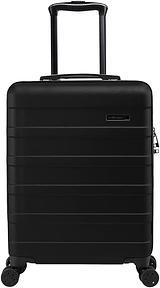
Cabin Max Anode Handgepäck Koffer 55x40x20 - Leicht, Hartschale, Handgepäck Trolley mit 4 Rädern
Trolleys are annoying. For weekend trips, definitely. The MATEIN Handgepäck Rucksack 40x30x20, Erweiterbar 24L Reiserucksack Flugzeug Herren Damen Travel Backpack for 27 euros is the answer for everyone who prefers hands-free travel.
As a backpack, you slip past gate checks. Counts as "personal item." No baggage belt wait. No stumbling over cobblestones.
Buy this if: You take short trips (2-3 days) or simply don't like trolleys. Budget option with 4,000+ 5-star reviews.
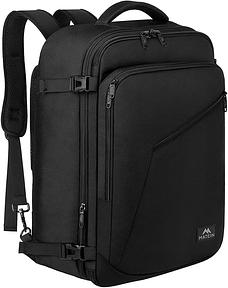
MATEIN Handgepäck Rucksack 40x30x20, Erweiterbar 24L Reiserucksack Flugzeug Herren Damen Travel Backpack
No matter which bag you buy: A FREETOO Gepäckwaage Tragbare Digitale Kofferwaage LCD-Anzeige mit Hintergrundbeleuchtung belongs in your travel gear. 8.49 euros is nothing compared to overweight fees.
Most airlines have weight limits between 6 and 10 kg. Nobody weighs their bag at home. At the airport, it's too late. With the scale, you know beforehand if you need to repack.
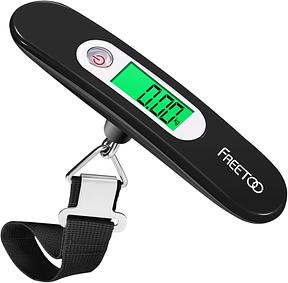
FREETOO Gepäckwaage Tragbare Digitale Kofferwaage LCD-Anzeige mit Hintergrundbeleuchtung
The liquids rule hasn't changed in 2026. EU regulations still apply:
Maximum 100 ml per container
All containers in a transparent, resealable plastic bag (max. 1 liter)
One bag per person
What many don't know: The German Federal Aviation Office counts creams, gels, and pastes as liquids too. Toothpaste, deodorant stick, lip balm. Everything goes in the bag.
Some airports with new CT scanners (Amsterdam, partially Munich) now allow liquids to stay in the bag. But that's not widespread yet. Safest bet: Have the bag ready to unpack if needed.
Tip for longer trips: You can buy liquids at your destination. Experienced frequent flyers pack only the essentials. Sunscreen, shower gel, shampoo are available everywhere.
Here's the truth nobody officially says: Checking frequency varies significantly. And it follows patterns.
When checks are strict:
Full flights are the main factor. When overhead bins get tight, gate agents pull out the measuring frames. That's why budget airlines (Ryanair, Wizz Air) check more often. They fly with higher load factors.
Add holiday periods and popular routes. Mallorca in August? Antalya during summer break? Crete at Easter? Expect gate measurements.
Where it's more relaxed:
Premium airlines on less full flights. Business Class generally. Early morning weekday departures (fewer families, less baggage). Connecting flights where you've already been checked once.
That doesn't mean you should risk it. ADAC reports that airlines have been checking much more strictly since 2025. Especially on full flights.
Let's do the math.
According to Handgepäck-Guru, an unannounced gate check-in costs:
Ryanair: 55 euros
EasyJet: 55 euros
Wizz Air: 60 euros
General average: 50-65 euros
A good, universally fitting bag with correct carry-on dimensions (55x40x20 cm) costs 60-90 euros. The Cabin Max Anode, for example, is around 60 euros and meets all airline requirements.
This means: After one gate fee, a proper bag has paid for itself. With three flights using the wrong bag, you've wasted 165 euros.
The IATA 2025 survey shows: 72% of travelers choose the cheapest ticket price and pay for extras separately. Airlines know this. Baggage fees are huge business. US airlines alone made 33 billion dollars from them in 2023.
A well-packed 44-liter bag is enough for a week. If you know how.
Roll, don't fold: Saves space and reduces wrinkles. T-shirts, shirts, pants. Everything gets rolled.
Layer system: Heavy items at the bottom (shoes), light ones on top (jackets). The bag doesn't tip and stays stable.
Packing cubes: Small fabric bags for sorting clothes. Sounds like overkill but makes a huge difference. Everything stays organized and compressed.
The 10% principle: Leave 10% space empty. For souvenirs, things you buy along the way, or if something won't fold as neatly as on the outbound trip.
Valuables in carry-on: Laptop, camera, important documents, medication. If your bag does have to be checked, you don't want these in the cargo hold. For long-haul flights, we also recommend checking out our best travel neck pillows tested. They take up hardly any space and make the difference between neck pain and restful flight.
As an Amazon Associate, we earn from qualifying purchases. Product prices and availability are subject to change.

Join thousands of smart travelers. Get exclusive airline baggage guides, packing hacks, and luggage reviews delivered weekly.