
Google Find Hub: Share Your Luggage Tracker Location With Airlines
 5 min read
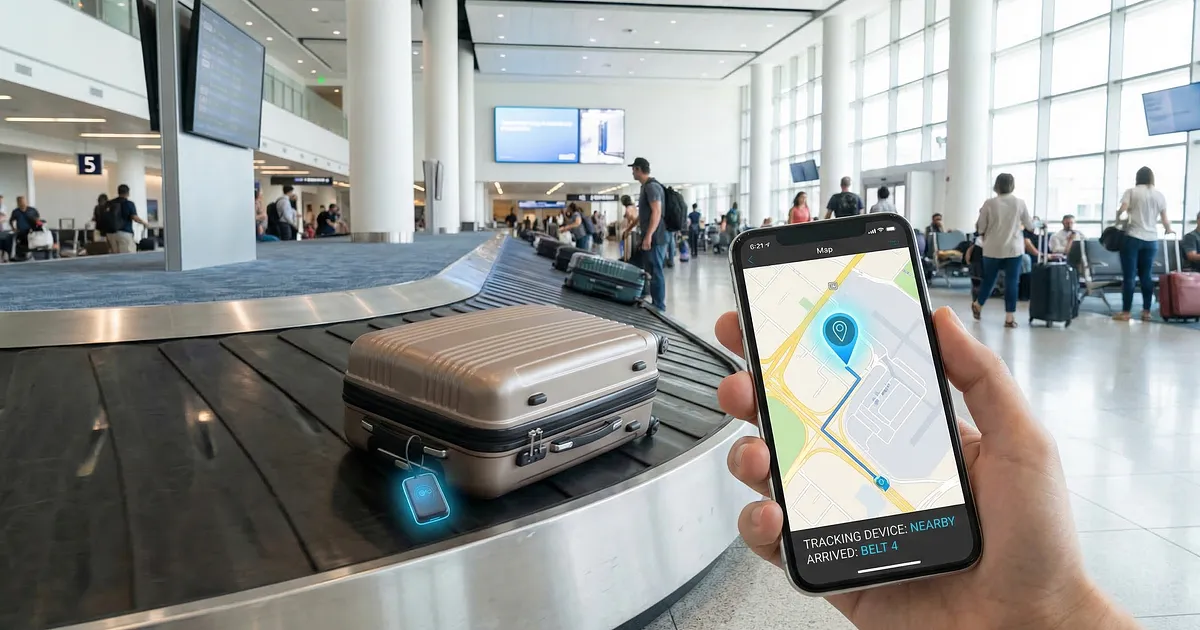
33.4 million bags ended up at the wrong airport in 2024. According to SITA Baggage IT Insights 2025, that costs the airline industry roughly $5 billion a year. Europe is the worst region for it, too. 12.3 mishandled bags per 1,000 passengers, nearly triple the Asia-Pacific rate.
Google just rolled out a feature that changes the game for Android users. If you have a luggage tracker in your suitcase, you can now share its live location directly with your airline. Encrypted, time-limited, through a single link.
What Is Google Find Hub?
Find Hub is Google's network for locating lost items. It used to be called "Find My Device" until the rebrand in May 2025. Think of it as Google's answer to Apple's "Find My." It uses billions of Android phones worldwide as a tracking network. Every Android device within range can help pinpoint a lost tracker, and the phone owner never even knows.
With about 68 percent global smartphone market share, Android has a massive potential network. Honestly, the accuracy wasn't always on par with Apple. But it got significantly better through 2025. Tests from mid-year showed average localization times under 20 minutes.
How Does the Airline Sharing Work?
As Google explained on their blog, here is what the process looks like:
- Open the Find Hub app and select your luggage tracker
- Tap "Share location" to generate an encrypted link
- Send that link to your airline (email, chat, or directly in the claim form)
- The airline sees your bag's real-time location on a map
The link automatically expires after seven days, according to 9to5Google. You can revoke access manually at any time.
What I like about this: you decide when the airline sees your tracker data. No permanent access, no hidden monitoring.
Which Airlines Support This?
The feature plugs into SITA WorldTracer and Reunitus NetTracer, the two biggest global baggage management systems. Skift reports that more than ten airlines are on board at launch.
The full Lufthansa Group is in from day one:
Lufthansa
Austrian Airlines
Brussels Airlines
Swiss International Air Lines
Turkish Airlines, Air India, Saudia, SAS, and several others have also joined. Since WorldTracer alone connects over 500 airlines and 2,800 airports, I think this list will grow quickly.
Google Find Hub vs. Apple Find My
Apple got there first. Since late 2024, iPhone users have been able to share AirTag locations with airlines through "Share Item Location." 36 airlines now use that feature, and the numbers are honestly hard to argue with. SITA data shows a 90 percent reduction in permanently lost bags. Delayed luggage gets returned 26 percent faster.
We covered the Apple side of this story in a separate post.
Google starts with about ten airlines. Apple has 36. That gap is real. But Android holds 68 percent of the global smartphone market. If the network keeps improving, Find Hub could potentially overtake Apple in the long run. Maybe. The sheer device count is on Google's side.
Which Luggage Trackers Work With Find Hub?
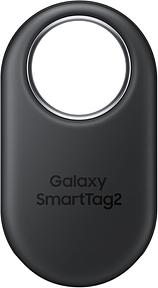
Not every Bluetooth tracker works with Find Hub. Samsung SmartTag, for example, runs on Samsung's own SmartThings network. It does not connect to Find Hub at all.
Here are the luggage trackers that actually work:
Chipolo Loop (around $45): Rechargeable, compact, solid reviews
Pebblebee Clip 5 (around $50): Dual-network tracker (works with both Google and Apple), loudest alarm in the group (130 dB)
Samsonite has announced that new suitcases will ship with built-in Find Hub technology. Australian luggage brand July is planning the same. No exact dates yet.
If you have an iPhone, the Apple AirTag (1. Generation) 4er Pack - Finde und behalte Deine Sachen im Blick: Schlüssel, Geldbörsen, Gepäck, Rucksäcke und mehr. Einfaches Einrichten mit iPhone oder iPad. Austauschbare Batterie is still the way to go. For Android users, the Chipolo Loop - Wiederaufladbarer Bluetooth Schlüsselfinder, kompatibel mit Google Find Hub and the Pebblebee Clip 5 - Wiederaufladbarer Bluetooth-Tracker, kompatibel mit Google Find Hub und Apple Find My are probably the best picks right now.
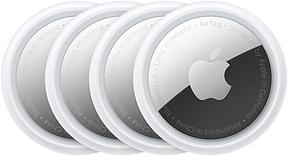
Affiliate link. Buying through it earns us a commission; the price stays the same for you.
Not available in your region — closest match
View at Amazon (as of Aug 15)Affiliate link. Buying through it earns us a commission; the price stays the same for you.
Not available in your region — closest match
View at Amazon (as of Aug 14)Affiliate link. Buying through it earns us a commission; the price stays the same for you.
Are Trackers Allowed in Checked Luggage?
Yes. Officially since May 2023. Germany's aviation authority confirmed that Bluetooth trackers with coin cell batteries (under 2.7 Wh) are allowed in checked bags. AirTags, Chipolo, and Pebblebee all fall well under that limit.
A surprising number of people don't know this. According to Aviation.Direct, nearly 39 percent of surveyed German travelers have experienced luggage loss at some point. A tracker in your suitcase is probably the simplest protection you can buy. Costs under $30, weighs almost nothing, and gives you a completely different feeling on your next long-haul flight.
All products from this post
The ones we named above are marked; the rest are alternatives in the same category.
Not available in your region — closest match
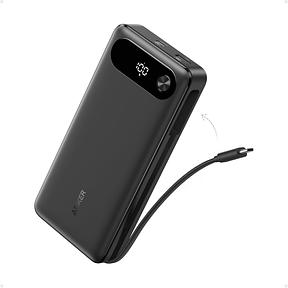
Anker Powerbank, 20.000mAh tragbares Ladegerät mit integriertem USB-C-Kabel, 87W Max Schnellladung, kompatibel mit MacBook, iPhone, Samsung und mehr
View at Amazon (as of Aug 15)
Affiliate notice: As an Amazon Associate, we earn from qualifying purchases. Product prices and availability are subject to change.
Frequently Asked Questions
What is Google Find Hub?
Google Find Hub (formerly Find My Device) is Google's network for locating lost items. It uses billions of Android devices worldwide as a tracking network. Since March 2026, users can share tracker locations with airlines through encrypted, time-limited links.
Are luggage trackers allowed on planes?
Yes. Since May 2023, aviation authorities have officially approved Bluetooth trackers with coin cell batteries (under 2.7 Wh) in checked luggage. AirTag, Chipolo, and Pebblebee all meet this requirement.
Which airlines support Google Find Hub?
At launch in March 2026, more than ten airlines support Find Hub, including the full Lufthansa Group (Lufthansa, Austrian, Brussels, Swiss), Turkish Airlines, Air India, Saudia, and SAS. The list is growing through SITA WorldTracer integration.
AirTag or Android tracker: which is better?
For iPhone users, AirTag remains the top choice. For Android users, Chipolo Loop (around $45) and Pebblebee Clip 5 (around $50, with dual-network support) are the best options. Apple currently has the denser network, but Google is catching up.
Does Samsung SmartTag work with Google Find Hub?
No. Samsung SmartTag uses Samsung's own SmartThings network. For Google Find Hub, you need compatible trackers like Chipolo Loop or Pebblebee Clip 5.
*Last updated: March 2026*